
UNITED STATES
SECURITIES AND EXCHANGE COMMISSION
Washington, D.C. 20549
FORM
CURRENT REPORT
Pursuant to Section 13 or 15(d)
of the Securities Exchange Act of 1934
Date of Report (Date of earliest event reported)
(Exact name of registrant as specified in its charter)
| (State or other jurisdiction of incorporation) |
(Commission File Number) |
(I.R.S. Employer Identification No.) |
| |
||
| (Address of principal executive offices) | (Zip Code) |
Registrant’s telephone number, including area code
Not Applicable
(Former name or former address, if changed since last report)
Check the appropriate box below if the Form 8-K filing is intended to simultaneously satisfy the filing obligation of the registrant under any of the following provisions:
| Written communications pursuant to Rule 425 under the Securities Act (17 CFR 230.425) |
| Soliciting material pursuant to Rule 14a-12 under the Exchange Act (17 CFR 240.14a-12) |
| Pre-commencement communications pursuant to Rule 14d-2(b) under the Exchange Act (17 CFR 240.14d-2(b)) |
| Pre-commencement communications pursuant to Rule 13e-4(c) under the Exchange Act (17 CFR 240.13e-4(c)) |
Securities registered pursuant to Section 12(b) of the Act:
| Title of each class |
Trade Symbol(s) |
Name of each exchange on which registered | ||
Indicate by check mark whether the registrant is an emerging growth company as defined in Rule 405 of the Securities Act of 1933 (§ 230.405 of this chapter) or Rule 12b-2 of the Securities Exchange Act of 1934 (§ 240.12b-2 of this chapter).
Emerging growth company
If an emerging growth company, indicate by check mark if the registrant has elected not to use the extended transition period for complying with any new or revised financial accounting standards provided pursuant to Section 13(a) of the Exchange Act.
| Item 7.01 | Regulation FD Disclosure. |
On June 22, 2026, TScan Therapeutics, Inc. (the “Company”) issued a press release announcing positive initial data from Cohort C of the ongoing ALLOHA™ Phase 1 study evaluating TSC-101, generated with the commercial-ready manufacturing process, in patients with heme malignancies undergoing allogeneic hematopoietic cell transplantation. The Company also released an updated company presentation, which includes additional details of its heme malignancies clinical programs, including Cohort C data from the ALLOHA™ Phase 1 trial. Copies of the press release and the updated company presentation are attached as Exhibits 99.1 and 99.2 to this Current Report on Form 8-K. The updated company presentation will also be available in the investor relations section of the Company’s website at https://ir.tscan.com. Information contained on the Company’s website is not incorporated by reference into this Current Report on Form 8-K, and you should not consider any information on, or that can be accessed from, the Company’s website as part of this Current Report on Form 8-K.
The information under this Item 7.01, including Exhibits 99.1 and 99.2 hereto, is being furnished and shall not be deemed “filed” for purposes of Section 18 of the Securities Exchange Act of 1934, as amended (the “Exchange Act”), or otherwise subject to the liabilities of that section, nor shall it be deemed incorporated by reference in any filing under the Securities Act of 1933, as amended, or the Exchange Act, except as expressly set forth by specific reference in such a filing. The Company undertakes no obligation to update, supplement or amend the material attached hereto as Exhibits 99.1 and 99.2.
| Item 8.01 | Other Events. |
On June 22, 2026, the Company provided an update on its heme malignancies clinical program, including initial data from Cohort C of the ongoing ALLOHA™ Phase 1 study evaluating TSC-101, generated with the commercial-ready manufacturing process, in patients with heme malignancies undergoing allogeneic hematopoietic cell transplantation. Key data highlights are set forth below.
| • | 19 patients were enrolled in Cohort C: |
| • | ~90% manufacturing success rate (17/19) with commercial-ready process |
| • | 14/19 patients went to transplant and received their first infusion of TSC-101 |
| • | 10/14 patients have received their planned second infusion, and 1/14 patients received a third infusion |
| • | 3/19 patients did not proceed to transplant due to clinical reasons |
| • | Chimerism data as observed by high sensitivity NGS assay (Alloheme) with assay cut-off of 0.2%: |
| • | 11 of 14 patients achieved complete donor chimerism within ~3 weeks of receiving their first infusion of TSC-101 and 2 of the remaining 3 patients are approaching complete donor chimerism |
| • | One patient with TP53 mutated AML remained in complete donor chimerism 6 months post-HCT |
| • | TSC-101 infusions were generally well-tolerated, safety was consistent with Cohort A, and observed adverse events were consistent with post-HCT adverse events. |
Forward-Looking Statements
This Current Report on Form 8-K contains forward-looking statements that are based on the Company’s beliefs and assumptions and on information currently available to the Company on the date of this Current Report. These forward-looking statements involve substantial risks and uncertainties. Any statements in this Current Report on Form 8-K other than statements of historical fact, including statements about the Company’s future expectations, plans and prospects, constitute forward-looking statements for purposes of the safe harbor provisions under the Private Securities Litigation Reform Act of 1995. Forward-looking statements include any statements about the Company’s strategy, operations and future expectations and plans and prospects for the Company, and any other statements containing the words “anticipate,” “believe,” “estimate,” “expect,” “intend”, “goal,” “may”, “might,” “plan,” “predict,” “project,” “seek,” “target,” “potential,” “will,” “would,” “could,” “should,” “continue,” and similar expressions. Such forward-looking statements involve substantial risks and uncertainties that could cause the Company’s financial and operating results, performance or achievements to differ significantly from those expressed or implied by the forward-looking statements, including the factors discussed in the “Risk Factors” section contained in the quarterly and annual reports that the Company files with the Securities and Exchange Commission. Any forward-looking statements represent the Company’s views only as of the date of this Current Report on Form 8-K. The Company anticipates that subsequent events and developments may cause its views to change. While the Company may elect to update these forward-looking statements at some point in the future, the Company specifically disclaims any obligation to do so except as required by law even if new information becomes available in the future.
| Item 9.01 | Financial Statements and Exhibits. |
(d) Exhibits:
| Exhibit No. |
Description | |
| 99.1 | Press release, dated June 22, 2026 | |
| 99.2 | Company Presentation, dated June 22, 2026 | |
| 104 | Cover Page Interactive Data File (embedded within the Inline XBRL document) | |
SIGNATURE
Pursuant to the requirements of the Securities Exchange Act of 1934, the registrant has duly caused this report to be signed on its behalf by the undersigned hereunto duly authorized.
| TScan Therapeutics, Inc. | ||||||
| Date: June 22, 2026 | By: | /s/ Gavin MacBeath | ||||
| Gavin MacBeath | ||||||
| Chief Executive Officer | ||||||
Exhibit 99.1

TScan Therapeutics Announces Positive Initial Data from Cohort C of Ongoing ALLOHA™ Phase 1 Study Evaluating TSC-101 in Patients with Heme Malignancies Undergoing Allogeneic Hematopoietic Cell Transplantation
11 of 14 patients dosed had complete donor chimerism within ~three weeks of receiving first infusion of TSC-101; an additional two had improving chimerism following TSC-101
TSC-101 continues to be well-tolerated
Company remains on track to enroll their first patient in the Phase 3 ALLOHA-2™ study of TSC-101 this month
Company to host virtual KOL event featuring Ran Reshef, M.D., M.Sc., today, June 22, at 8:30 a.m. ET
WALTHAM, Mass., JUNE 22, 2026 — TScan Therapeutics, Inc. (Nasdaq: TCRX), a clinical-stage biotechnology company focused on the development of T cell receptor (TCR)-engineered T cell (TCR-T) therapies for the treatment of patients with cancer, today presented data from Cohort C of the ongoing ALLOHA™ Phase 1 study, evaluating TSC-101 generated with the commercial-ready manufacturing process, in patients with heme malignancies undergoing allogeneic hematopoietic cell transplantation (allo-HCT).
“These data provide important support for our commercial-ready manufacturing process and reinforce our confidence in the consistency and quality of the product candidate being delivered to patients,” said Gavin MacBeath, Ph.D., Chief Executive Officer. “We are very encouraged by the 11 of 14 patients who showed complete donor chimerism approximately three weeks after their first infusion as well as the complete chimerism seen in all 5 patients who were assessed after their second infusion of TSC-101. Furthermore, even in a higher-risk patient population when compared to patients in Cohort A and our control arm, 93% of patients responded to TSC-101 with decreasing recipient chimerism. Taken together, these findings support our planned transition into the pivotal Phase 3 study of TSC-101 this month. We look forward to advancing further development of TSC-101 with the goal of preventing relapse following allo-HCT and improving outcomes for these patients.”
“The initial results from Cohort C continue to exhibit strong clinical efficacy while maintaining a positive safety profile in patients receiving TSC-101 after their standard of care allo-HCT,” said Chrystal U. Louis, M.D., Chief Medical Officer. “This cohort enrolled ahead of schedule and highlights the strong investigator engagement and growing interest in the TSC-101 clinical development program. As relapse remains a leading cause of death following allo-HCT, we are encouraged by the potential of TSC-101 to address residual disease and thereby improve long-term outcomes for patients with heme disorders.”
Key Data Highlights
| • | 19 patients were enrolled in Cohort C: |
| • | ~90% manufacturing success rate (17/19) with commercial-ready process |
| • | 14/19 patients went to transplant and received their first infusion of TSC-101 |
| • | 10/14 patients have received their planned second infusion, and 1/14 patients received a third infusion |
| • | 3/19 patients did not proceed to transplant due to clinical reasons |
| • | Chimerism data as observed by high sensitivity NGS assay (Alloheme) with assay cut-off of 0.2%: |
| • | 11 of 14 patients achieved complete donor chimerism within ~3 weeks of receiving their first infusion of TSC-101 and 2 of the remaining 3 patients are approaching complete donor chimerism |
| • | One patient with TP53 mutated AML remained in complete donor chimerism 6 months post-HCT |
| • | TSC-101 infusions were generally well-tolerated, safety was consistent with Cohort A, and observed adverse events were consistent with post-HCT adverse events. |
Virtual Key Opinion Leader (KOL) Event
The Company will host a virtual KOL event featuring Ran Reshef, M.D., M.Sc., today, June 22, 2026, at 8:30 a.m. ET to discuss initial data from Cohort C of the ALLOHA™ Phase 1 study using its commercial-ready manufacturing process, as well as plans and expectations for initiating a pivotal Phase 3 study for TSC-101. The Company will also discuss follow-on product candidates and the market opportunity for the heme program. A replay of the webcast will be available following the call.
Dr. Reshef is the Professor of Medicine and Director of Translational Research, Blood and Marrow Transplantation Program, Director of the Cell Therapy Program at Columbia University Irving Medical Center. Details about attending the event can be found here.
About TScan Therapeutics, Inc.
TScan is a clinical-stage biotechnology company focused on the development of T cell receptor (TCR)-engineered T cell (TCR-T) therapies for the treatment of patients with cancer. The Company’s lead TCR-T therapy candidate is in development for the treatment of patients with hematologic malignancies to prevent relapse following allogeneic hematopoietic cell transplantation (the ALLOHA™ Phase 1 heme trial). The Company is also in early stages of developing methods for in vivo engineering to treat solid tumors. In addition, the Company is applying its target discovery platform to discover novel targets in various T cell-mediated autoimmune disorders.
Forward-Looking Statements
This release contains forward-looking statements within the meaning of the Private Securities Litigation Reform Act of 1995, including, but not limited to, express or implied statements regarding the Company’s plans, progress, expectations, and timing relating to the Company’s hematologic malignancies program, including clinical updates of the ALLOHATM Phase 1 heme trial, data from Cohort C and the implications of such results, presentation of data, enrollment and dosing of patients, clinical trial design and initiation of a pivotal Phase 3 trial for TSC-101; the potential benefits of any of the Company’s proprietary platforms or current or future product candidates in treating patients; and the Company’s goals and strategy. TScan intends such forward-looking statements to be covered by the safe harbor provisions for forward-looking statements contained in Section 21E of the Securities Exchange Act of 1934 and the Private Securities Litigation Reform Act of 1995. In some cases, you can identify forward-looking statements by terms such as, but not limited to, “may,” “might,” “will,” “objective,” “intend,” “should,” “could,” “can,” “would,” “expect,” “believe,” “anticipate,” “project,” “target,” “design,” “estimate,” “predict,” “potential,” “plan,” “on track,” or similar expressions or the negative of those terms. Such forward-looking statements are based upon current expectations that involve risks, changes in circumstances, assumptions, and uncertainties. The express or implied forward-looking statements included in this release are only predictions and are subject to a number of risks, uncertainties and assumptions, including, without limitation: the beneficial characteristics, safety, efficacy, therapeutic effects and potential advantages of TScan’s TCR-T therapy product candidates; TScan’s expectations regarding its preclinical studies or clinical trials being predictive of future clinical trial results; TScan’s approved INDs being indicative or predictive of bringing TScan closer to its goal of providing customized TCR-T therapies to treat patients with cancer; the timing of the launch, initiation, progress, expected results and announcements of TScan’s preclinical studies, clinical trials and its research and development programs; TScan’s ability to enroll patients for its clinical trials within its expected timeline; TScan’s plans relating to developing and commercializing its TCR-T therapy product candidates, if approved, including sales strategy; estimates of the size of the addressable market for TScan’s TCR-T therapy product candidates; TScan’s manufacturing capabilities and the scalable nature of its manufacturing process; TScan’s estimates regarding expenses, future milestone payments and revenue, capital requirements and needs for additional financing; TScan’s expectations regarding competition; TScan’s anticipated growth strategies; TScan’s ability to attract or retain key personnel; TScan’s ability to establish and maintain development partnerships and collaborations; TScan’s expectations regarding federal, state and foreign regulatory requirements; TScan’s ability to obtain and maintain intellectual property protection for its proprietary platform technology and our product candidates;
the sufficiency of TScan’s existing capital resources to fund its future operating expenses and capital expenditure requirements; and other factors that are described in the “Risk Factors” and “Management’s Discussion and Analysis of Financial Condition and Results of Operations” sections of TScan’s most recent Annual Report on Form 10-K and any other filings that TScan has made or may make with the SEC in the future. Any forward-looking statements contained in this release represent TScan’s views only as of the date hereof and should not be relied upon as representing its views as of any subsequent date. Except as required by law, TScan explicitly disclaims any obligation to update any forward-looking statements.
Investor and Media Contact
Caileigh Dougherty
AVP, Head of Corporate Communications & Investor Relations
857-399-9890
cdougherty@tscan.com
Data from Cohort C of the Phase 1 ALLOHA™ Study June 2026 Exhibit 99.2
Disclaimers and forward-looking statements This presentation and the accompanying discussion contain forward-looking statements within the meaning of the Private Securities Litigation Reform Act of 1995, including, but not limited to, express or implied statements regarding TScan Therapeutics, Inc.’s ("TScan or the "Company") plans, progress, and timing relating to the Company’s clinical programs and the presentation of data, the Company’s current and future research and development plans or expectations, the structure, timing and success of the Company’s planned preclinical development, submission of INDs, manufacturing, and clinical trials, the potential benefits of any of the Company’s proprietary platforms or current or future product candidates in treating patients, the potential commercial opportunities of any of the Company’s proprietary platforms or current or future product candidates, the Company's ability to fund its operating expenses and capital expenditure requirements with its existing cash and cash equivalents, and the Company’s goals and strategy. TScan intends such forward-looking statements to be covered by the safe harbor provisions for forward-looking statements contained in Section 21E of the Securities Exchange Act of 1934 and the Private Securities Litigation Reform Act of 1995. In some cases, you can identify forward-looking statements by terms such as, but not limited to, “may,” “might,” “will,” “objective,” “intend,” “should,” “could,” “can,” “would,” “expect,” “believe,” “anticipate,” “project,” “target,” “design,” “estimate,” “predict,” “potential,” “plan,” “on track,” or similar expressions or the negative of those terms. Such forward-looking statements are based upon current expectations that involve risks, changes in circumstances, assumptions, and uncertainties. The express or implied forward-looking statements included in this presentation are only predictions and are subject to a number of risks, uncertainties and assumptions, including, without limitation: the beneficial characteristics, safety, efficacy, therapeutic effects and potential advantages of TScan’s TCR-T therapy candidates; TScan’s expectations regarding its preclinical studies being predictive of clinical trial results; the timing of the initiation, progress and expected results of TScan’s preclinical studies, clinical trials and its research and development programs; TScan’s plans relating to developing and commercializing its TCR-T therapy candidates, if approved, including sales strategy; estimates of the size of the addressable market for TScan’s TCR-T therapy candidates; TScan’s manufacturing capabilities and the scalable nature of its manufacturing process; TScan’s estimates regarding expenses, future milestone payments and revenue, capital requirements and needs for additional financing; TScan’s expectations regarding competition; TScan’s anticipated growth strategies; TScan’s ability to attract or retain key personnel; TScan’s ability to establish and maintain development partnerships and collaborations; TScan’s expectations regarding federal, state and foreign regulatory requirements; TScan’s ability to obtain and maintain intellectual property protection for its proprietary platform technology and its product candidates; the sufficiency of TScan’s existing capital resources to fund its future operating expenses and capital expenditure requirements; and other factors that are described in the “Risk Factors” and “Management’s Discussion and Analysis of Financial Condition and Results of Operations” sections of TScan’s most recent Annual Report on Form 10-K, subsequent Quarterly Reports on Form 10-Q and any other filings that TScan has made or may make with the SEC in the future. Any forward-looking statements contained in this presentation represent TScan’s views only as of the date hereof and should not be relied upon as representing its views as of any subsequent date. Except as required by law, TScan explicitly disclaims any obligation to update any forward-looking statements.
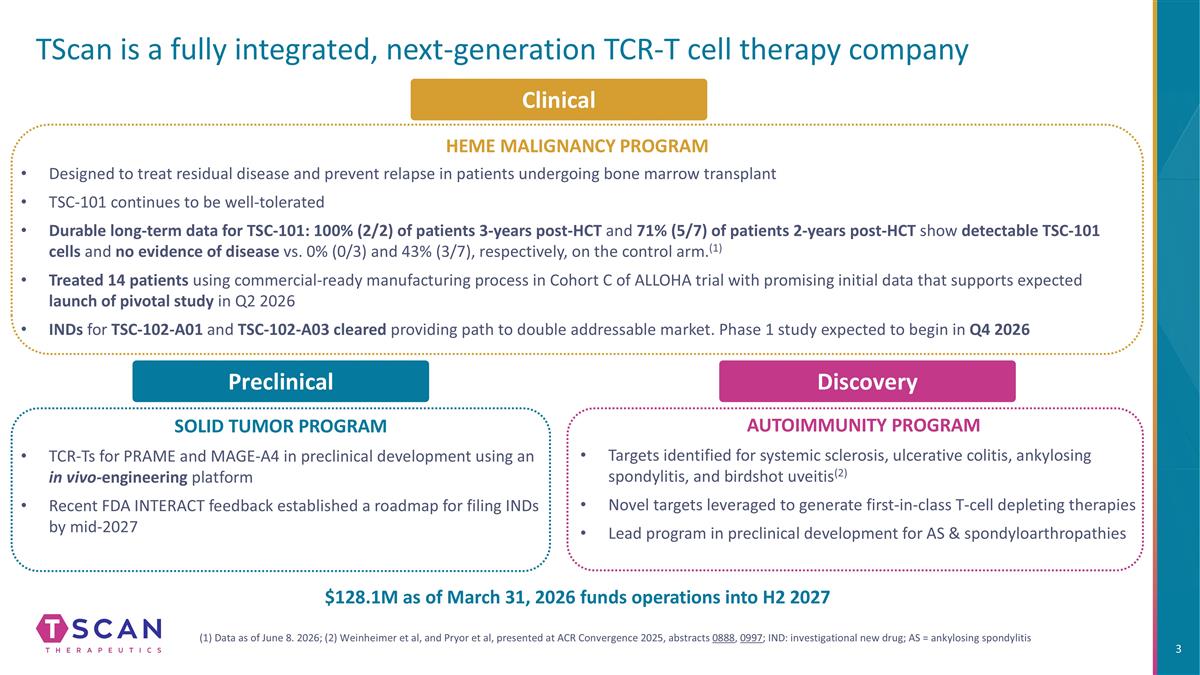
TScan is a fully integrated, next-generation TCR-T cell therapy company HEME MALIGNANCY PROGRAM Designed to treat residual disease and prevent relapse in patients undergoing bone marrow transplant TSC-101 continues to be well-tolerated Durable long-term data for TSC-101: 100% (2/2) of patients 3-years post-HCT and 71% (5/7) of patients 2-years post-HCT show detectable TSC-101 cells and no evidence of disease vs. 0% (0/3) and 43% (3/7), respectively, on the control arm.(1) Treated 14 patients using commercial-ready manufacturing process in Cohort C of ALLOHA trial with promising initial data that supports expected launch of pivotal study in Q2 2026 INDs for TSC-102-A01 and TSC-102-A03 cleared providing path to double addressable market. Phase 1 study expected to begin in Q4 2026 SOLID TUMOR PROGRAM TCR-Ts for PRAME and MAGE-A4 in preclinical development using an in vivo-engineering platform Recent FDA INTERACT feedback established a roadmap for filing INDs by mid-2027 Discovery AUTOIMMUNITY PROGRAM Targets identified for systemic sclerosis, ulcerative colitis, ankylosing spondylitis, and birdshot uveitis(2) Novel targets leveraged to generate first-in-class T-cell depleting therapies Lead program in preclinical development for AS & spondyloarthropathies (1) Data as of June 8. 2026; (2) Weinheimer et al, and Pryor et al, presented at ACR Convergence 2025, abstracts 0888, 0997; IND: investigational new drug; AS = ankylosing spondylitis Clinical Preclinical $128.1M as of March 31, 2026 funds operations into H2 2027
Agenda Overview of Heme Program and Manufacturing Update Gavin MacBeath, Ph.D. Updated Data from Cohort C of Phase 1 ALLOHA™ Trial Gavin MacBeath, Ph.D., Ran Reshef, M.D., M.Sc. Phase 3 Trial Design (ALLOHA-2) Chrystal Louis, M.D., M.P.H. Market Opportunity for TSC-101 and Follow-on Product Candidates Gavin MacBeath, Ph.D., Ran Reshef, M.D., M.Sc. Q&A Session Gavin MacBeath, Dr. Reshef, Chrystal Louis, and Shrikanta Chattopadhyay, M.D.
Heme Malignancies: Targeting residual disease to prevent relapse in patients undergoing allogeneic HCT
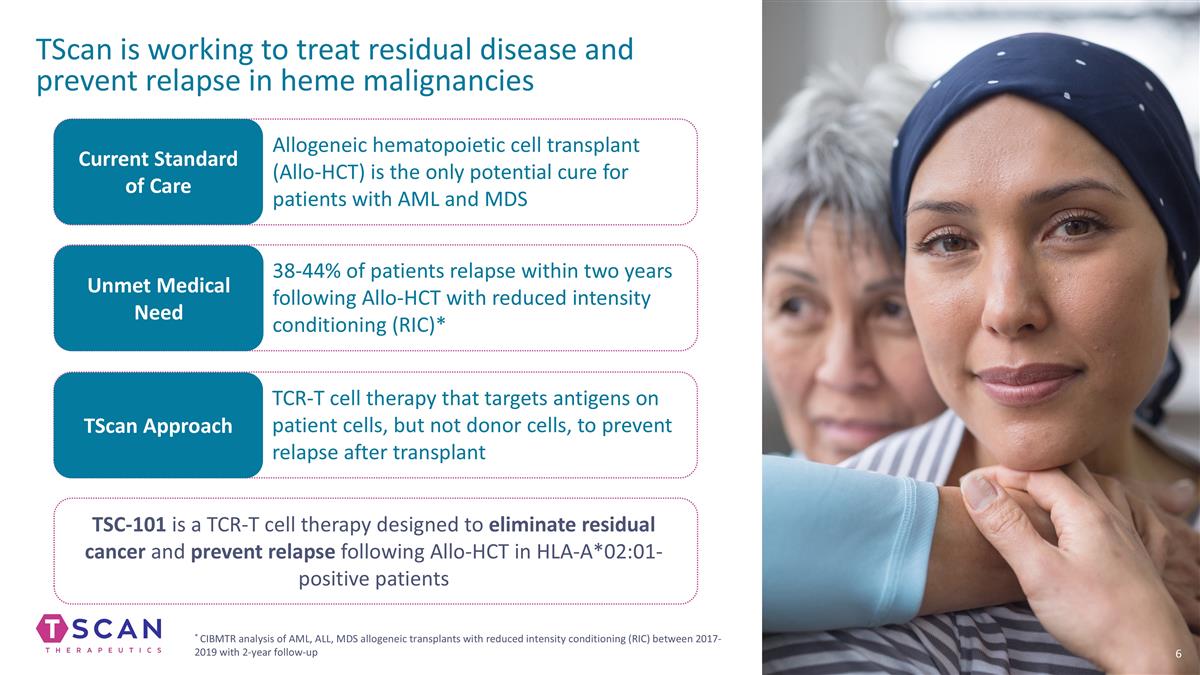
TScan is working to treat residual disease and prevent relapse in heme malignancies Current Standard of Care Unmet Medical Need TScan Approach Allogeneic hematopoietic cell transplant (Allo-HCT) is the only potential cure for patients with AML and MDS 38-44% of patients relapse within two years following Allo-HCT with reduced intensity conditioning (RIC)* TCR-T cell therapy that targets antigens on patient cells, but not donor cells, to prevent relapse after transplant TSC-101 is a TCR-T cell therapy designed to eliminate residual cancer and prevent relapse following Allo-HCT in HLA-A*02:01-positive patients * CIBMTR analysis of AML, ALL, MDS allogeneic transplants with reduced intensity conditioning (RIC) between 2017-2019 with 2-year follow-up
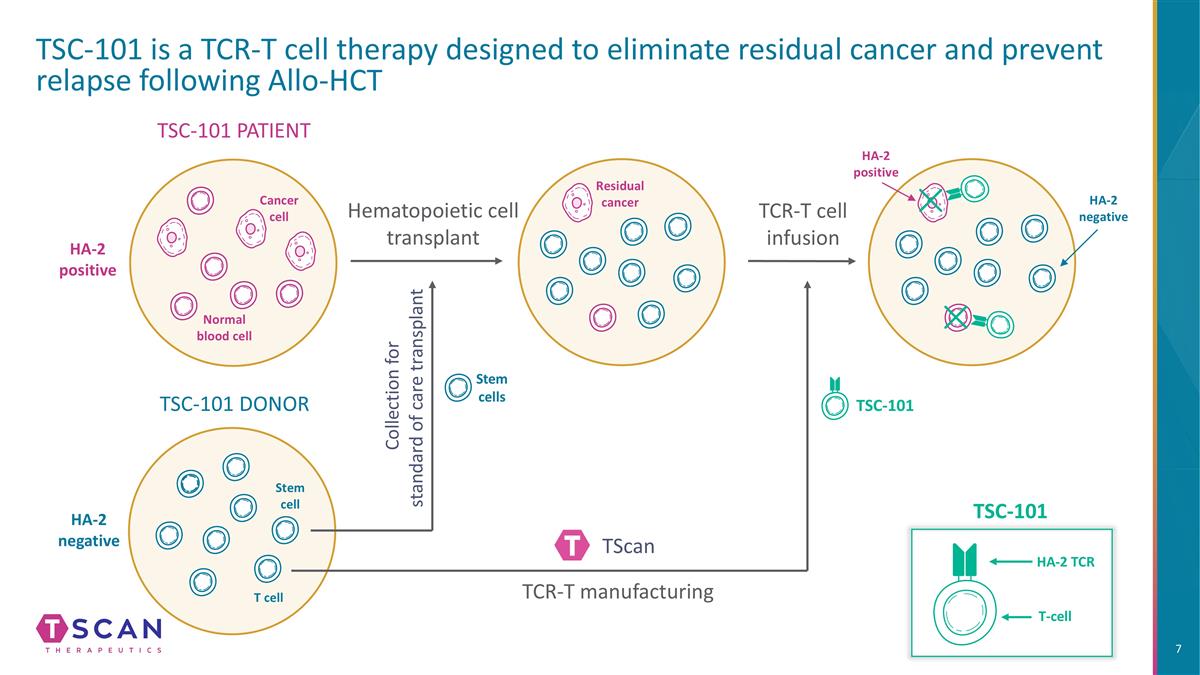
TSC-101 is a TCR-T cell therapy designed to eliminate residual cancer and prevent relapse following Allo-HCT TSC-101 PATIENT TSC-101 DONOR Hematopoietic cell transplant Cancer cell Normal blood cell Stem cell T cell HA-2 positive HA-2 negative HA-2 negative HA-2 positive TSC-101 Residual cancer Stem cells TCR-T cell infusion T-cell HA-2 TCR TSC-101 Collection for standard of care transplant TScan TCR-T manufacturing
Heme Program: TSC-101 Recap of ASH data
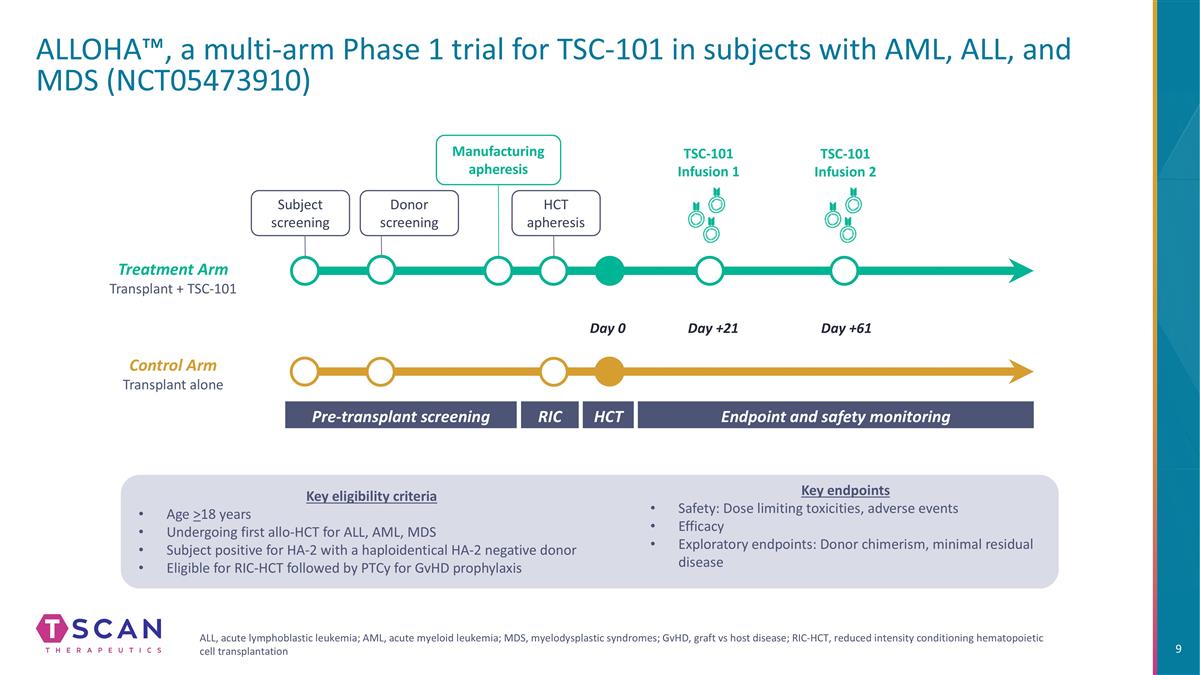
ALLOHA™, a multi-arm Phase 1 trial for TSC-101 in subjects with AML, ALL, and MDS (NCT05473910) HCT Pre-transplant screening Endpoint and safety monitoring RIC Day 0 Day +21 Day +61 Donor screening Manufacturing apheresis HCT apheresis TSC-101 Infusion 1 TSC-101 Infusion 2 Subject screening Control Arm Transplant alone Treatment Arm Transplant + TSC-101 Key eligibility criteria Age >18 years Undergoing first allo-HCT for ALL, AML, MDS Subject positive for HA-2 with a haploidentical HA-2 negative donor Eligible for RIC-HCT followed by PTCy for GvHD prophylaxis Key endpoints Safety: Dose limiting toxicities, adverse events Efficacy Exploratory endpoints: Donor chimerism, minimal residual disease ALL, acute lymphoblastic leukemia; AML, acute myeloid leukemia; MDS, myelodysplastic syndromes; GvHD, graft vs host disease; RIC-HCT, reduced intensity conditioning hematopoietic cell transplantation
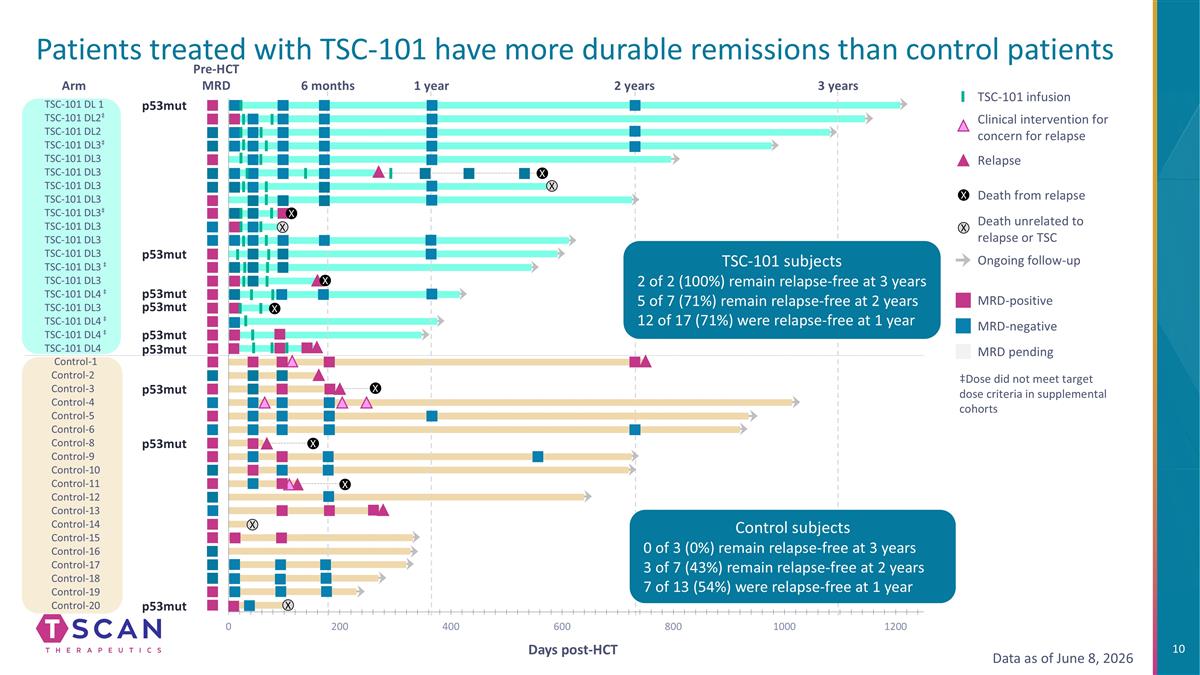
Patients treated with TSC-101 have more durable remissions than control patients Control-1 Control-2 Control-3 Control-8 Control-5 Control-4 Control-6 Control-9 Control-10 Control-11 Control-12 Control-13 Control-14 Control-15 Control-16 Control-17 Control-18 Arm TSC-101 DL 1 TSC-101 DL2‡ TSC-101 DL2 TSC-101 DL3‡ TSC-101 DL3 TSC-101 DL3 TSC-101 DL3 TSC-101 DL3 TSC-101 DL3‡ TSC-101 DL3 TSC-101 DL3 TSC-101 DL3 TSC-101 DL3 ‡ TSC-101 DL3 TSC-101 DL4 ‡ TSC-101 DL3 TSC-101 DL4 ‡ TSC-101 DL4 ‡ TSC-101 DL4 Days post-HCT ‡Dose did not meet target dose criteria in supplemental cohorts MRD-positive MRD-negative MRD pending TSC-101 infusion Clinical intervention for concern for relapse Ongoing follow-up Death from relapse Death unrelated to relapse or TSC Relapse X X Pre-HCT MRD Control-19 Control-20 2 years 1 year 6 months 3 years p53mut p53mut p53mut p53mut p53mut p53mut p53mut p53mut X X X X X X X X TSC-101 subjects 2 of 2 (100%) remain relapse-free at 3 years 5 of 7 (71%) remain relapse-free at 2 years 12 of 17 (71%) were relapse-free at 1 year Data as of June 8, 2026 Control subjects 0 of 3 (0%) remain relapse-free at 3 years 3 of 7 (43%) remain relapse-free at 2 years 7 of 13 (54%) were relapse-free at 1 year p53mut X X X
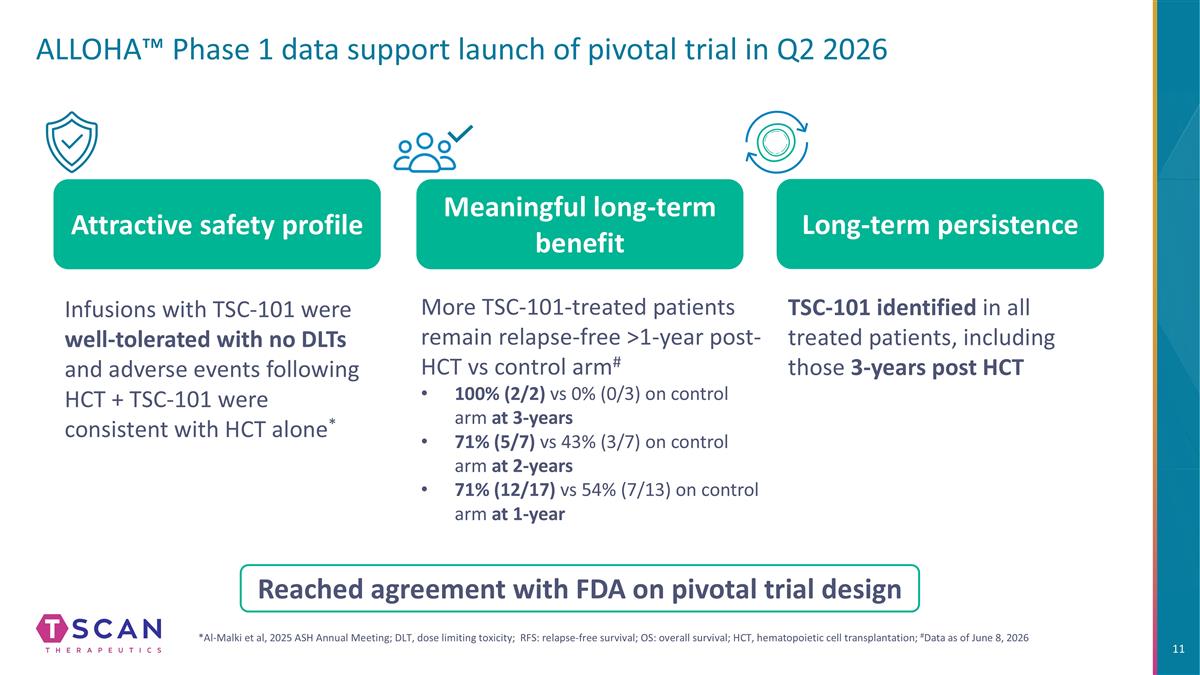
ALLOHA™ Phase 1 data support launch of pivotal trial in Q2 2026 Infusions with TSC-101 were well-tolerated with no DLTs and adverse events following HCT + TSC-101 were consistent with HCT alone* TSC-101 identified in all treated patients, including those 3-years post HCT Attractive safety profile Long-term persistence Meaningful long-term benefit More TSC-101-treated patients remain relapse-free >1-year post-HCT vs control arm# 100% (2/2) vs 0% (0/3) on control arm at 3-years 71% (5/7) vs 43% (3/7) on control arm at 2-years 71% (12/17) vs 54% (7/13) on control arm at 1-year Reached agreement with FDA on pivotal trial design *Al-Malki et al, 2025 ASH Annual Meeting; DLT, dose limiting toxicity; RFS: relapse-free survival; OS: overall survival; HCT, hematopoietic cell transplantation; #Data as of June 8, 2026
Heme Program Update: Patients infused with TSC-101 manufactured with commercial ready process (Cohort C)
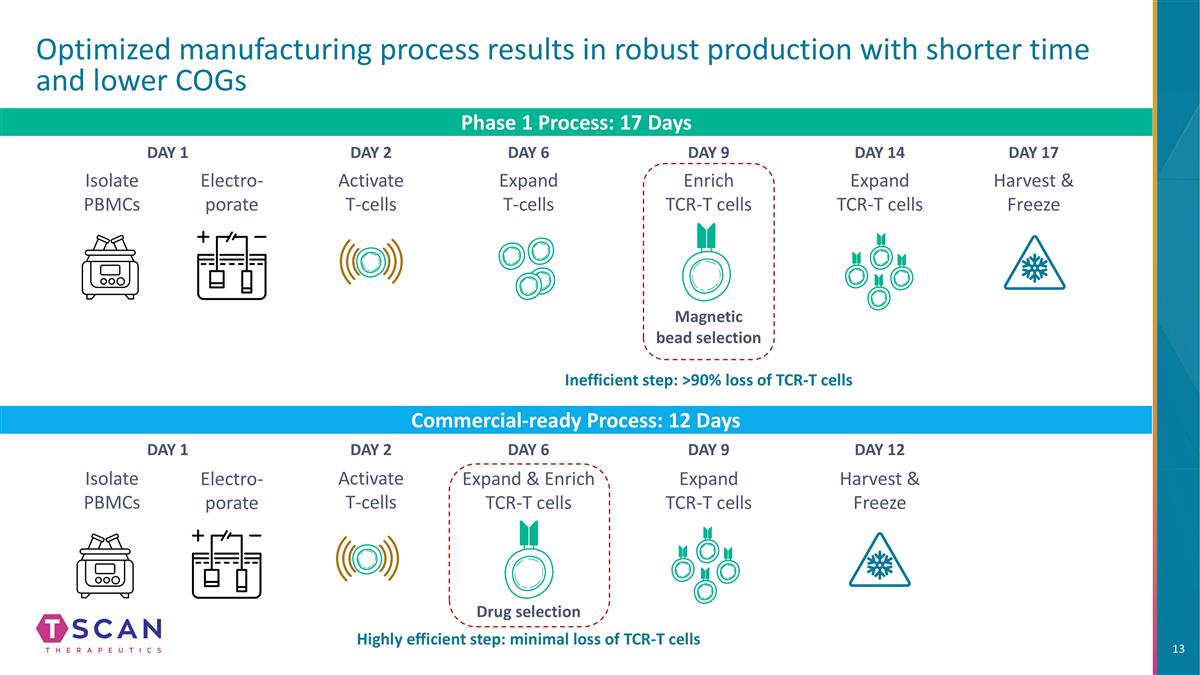
Optimized manufacturing process results in robust production with shorter time and lower COGs Phase 1 Process: 17 Days Commercial-ready Process: 12 Days Isolate PBMCs Electro-porate Activate T-cells Expand T-cells Harvest & Freeze Enrich TCR-T cells DAY 1 DAY 2 DAY 6 DAY 9 DAY 17 Isolate PBMCs Electro-porate DAY 1 Activate T-cells DAY 2 Expand & Enrich TCR-T cells DAY 6 Expand TCR-T cells Harvest & Freeze DAY 9 DAY 12 Expand TCR-T cells DAY 14 Drug selection Magnetic bead selection Inefficient step: >90% loss of TCR-T cells Highly efficient step: minimal loss of TCR-T cells
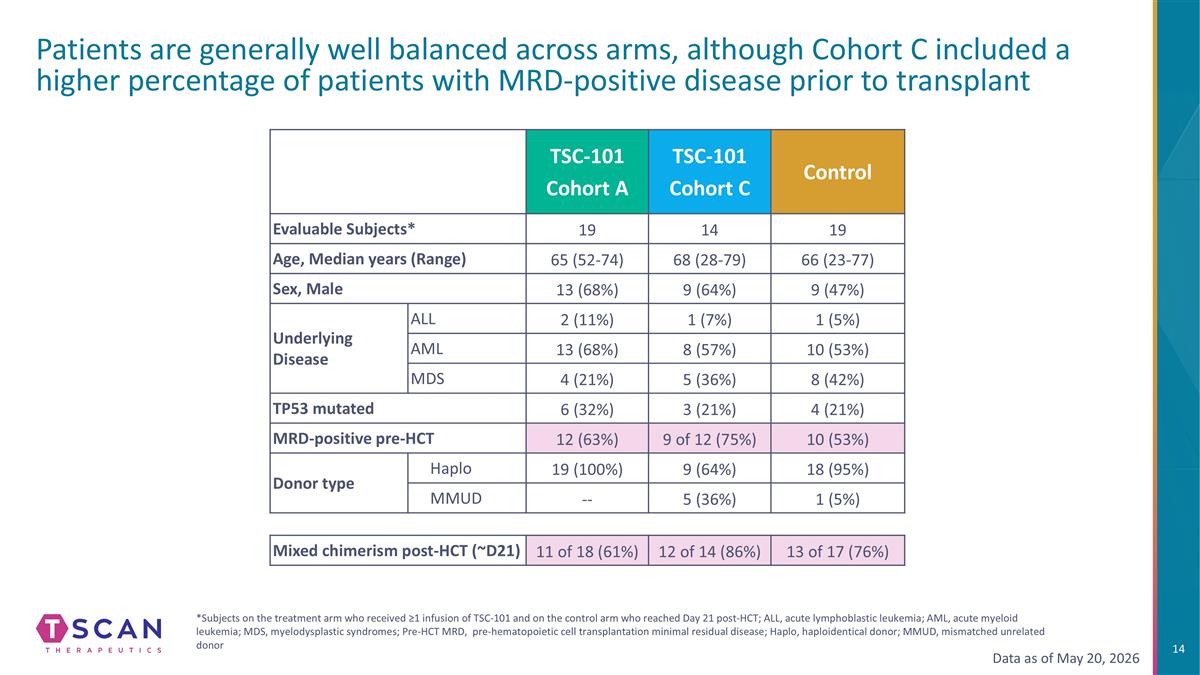
Patients are generally well balanced across arms, although Cohort C included a higher percentage of patients with MRD-positive disease prior to transplant TSC-101 Cohort A TSC-101 Cohort C Control Evaluable Subjects* 19 14 19 Age, Median years (Range) 65 (52-74) 68 (28-79) 66 (23-77) Sex, Male 13 (68%) 9 (64%) 9 (47%) Underlying Disease ALL 2 (11%) 1 (7%) 1 (5%) AML 13 (68%) 8 (57%) 10 (53%) MDS 4 (21%) 5 (36%) 8 (42%) TP53 mutated 6 (32%) 3 (21%) 4 (21%) MRD-positive pre-HCT 12 (63%) 9 of 12 (75%) 10 (53%) Donor type Haplo 19 (100%) 9 (64%) 18 (95%) MMUD -- 5 (36%) 1 (5%) Data as of May 20, 2026 *Subjects on the treatment arm who received ≥1 infusion of TSC-101 and on the control arm who reached Day 21 post-HCT; ALL, acute lymphoblastic leukemia; AML, acute myeloid leukemia; MDS, myelodysplastic syndromes; Pre-HCT MRD, pre-hematopoietic cell transplantation minimal residual disease; Haplo, haploidentical donor; MMUD, mismatched unrelated donor Mixed chimerism post-HCT (~D21) 11 of 18 (61%) 12 of 14 (86%) 13 of 17 (76%)
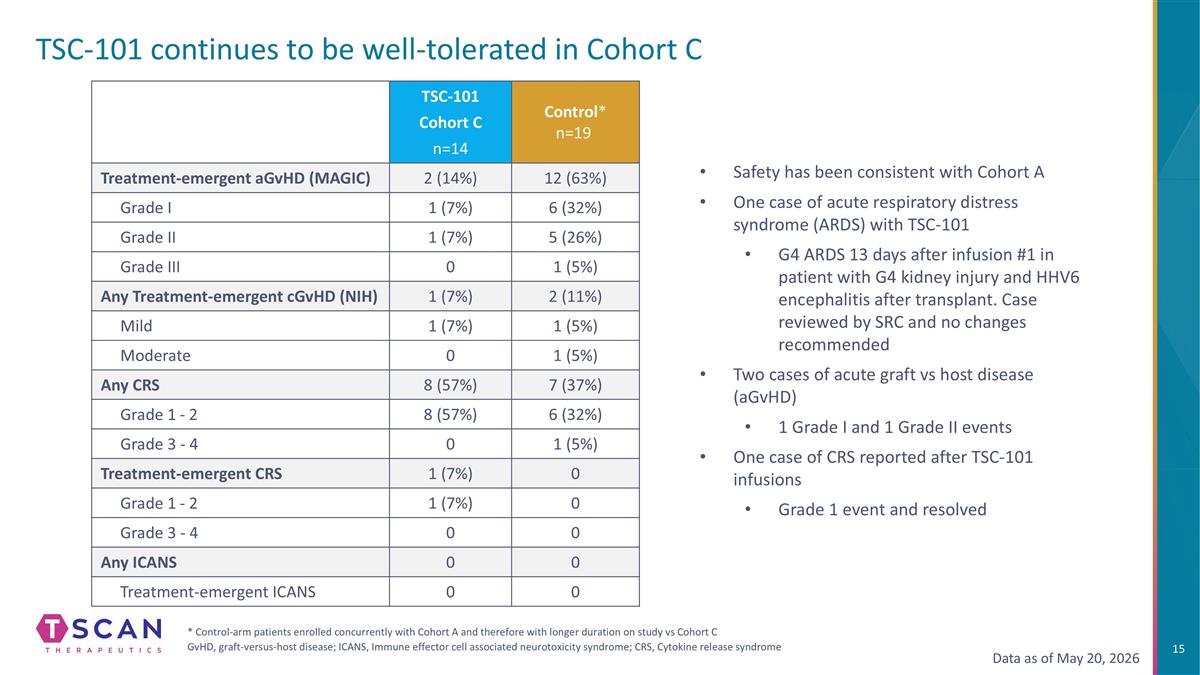
TSC-101 continues to be well-tolerated in Cohort C TSC-101 Cohort C n=14 Control* n=19 Treatment-emergent aGvHD (MAGIC) 2 (14%) 12 (63%) Grade I 1 (7%) 6 (32%) Grade II 1 (7%) 5 (26%) Grade III 0 1 (5%) Any Treatment-emergent cGvHD (NIH) 1 (7%) 2 (11%) Mild 1 (7%) 1 (5%) Moderate 0 1 (5%) Any CRS 8 (57%) 7 (37%) Grade 1 - 2 8 (57%) 6 (32%) Grade 3 - 4 0 1 (5%) Treatment-emergent CRS 1 (7%) 0 Grade 1 - 2 1 (7%) 0 Grade 3 - 4 0 0 Any ICANS 0 0 Treatment-emergent ICANS 0 0 * Control-arm patients enrolled concurrently with Cohort A and therefore with longer duration on study vs Cohort C GvHD, graft-versus-host disease; ICANS, Immune effector cell associated neurotoxicity syndrome; CRS, Cytokine release syndrome Safety has been consistent with Cohort A One case of acute respiratory distress syndrome (ARDS) with TSC-101 G4 ARDS 13 days after infusion #1 in patient with G4 kidney injury and HHV6 encephalitis after transplant. Case reviewed by SRC and no changes recommended Two cases of acute graft vs host disease (aGvHD) 1 Grade I and 1 Grade II events One case of CRS reported after TSC-101 infusions Grade 1 event and resolved Data as of May 20, 2026
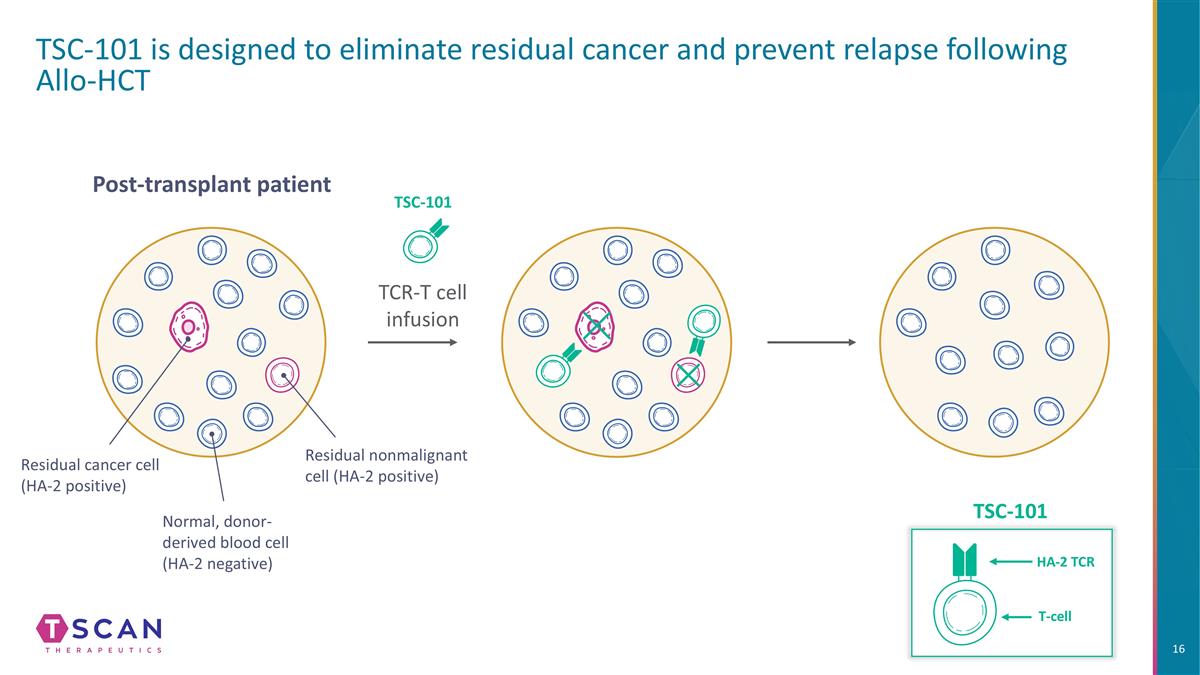
TSC-101 is designed to eliminate residual cancer and prevent relapse following Allo-HCT Residual cancer cell (HA-2 positive) Residual nonmalignant cell (HA-2 positive) Normal, donor-derived blood cell (HA-2 negative) Post-transplant patient TCR-T cell infusion TSC-101 T-cell HA-2 TCR TSC-101
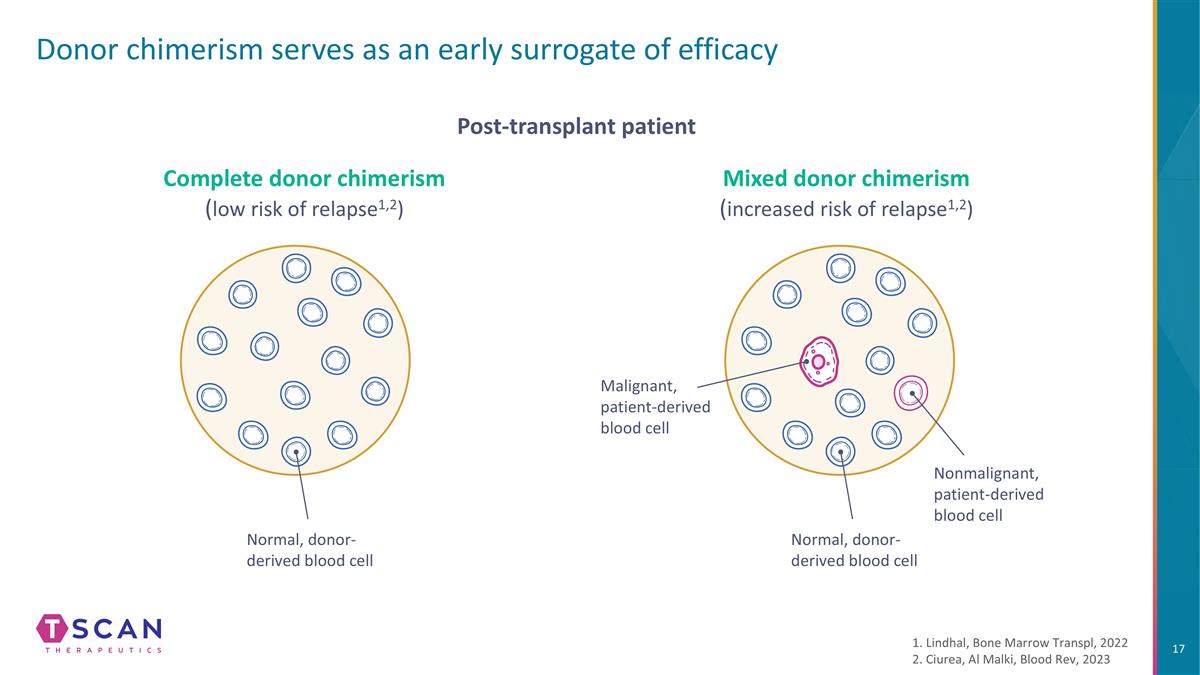
Donor chimerism serves as an early surrogate of efficacy Malignant, patient-derived blood cell Nonmalignant, patient-derived blood cell Normal, donor-derived blood cell Post-transplant patient Normal, donor-derived blood cell Complete donor chimerism (low risk of relapse1,2) Mixed donor chimerism (increased risk of relapse1,2) 1. Lindhal, Bone Marrow Transpl, 2022 2. Ciurea, Al Malki, Blood Rev, 2023
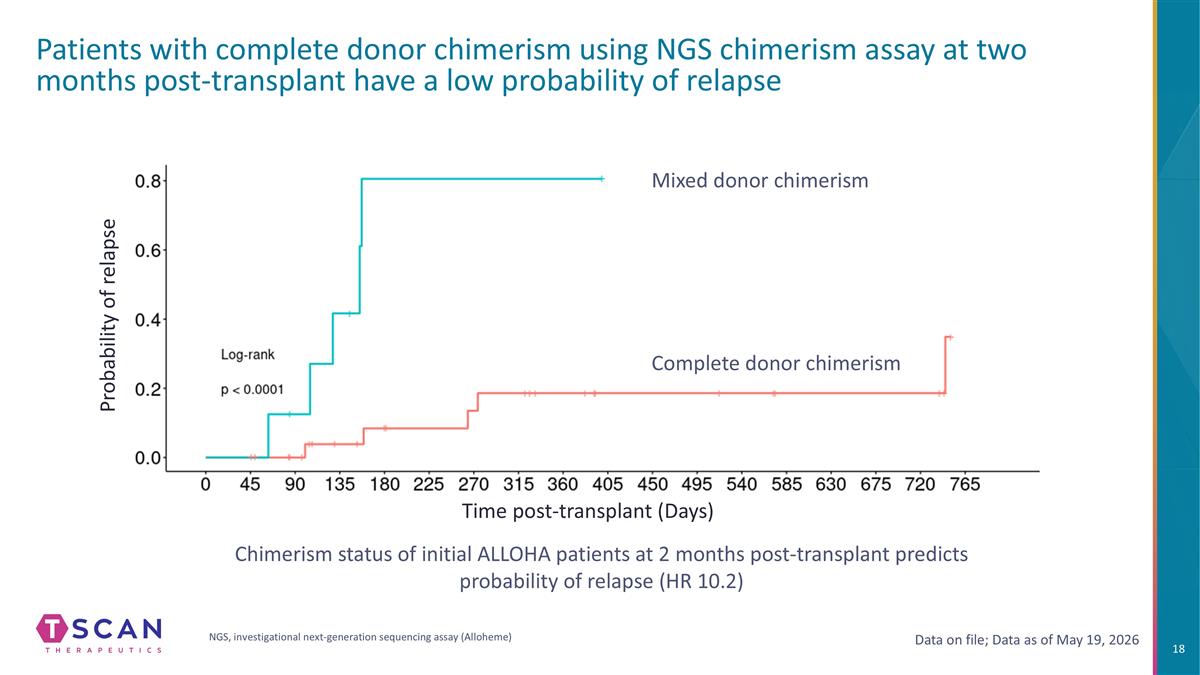
Patients with complete donor chimerism using NGS chimerism assay at two months post-transplant have a low probability of relapse Data on file; Data as of May 19, 2026 Chimerism status of initial ALLOHA patients at 2 months post-transplant predicts probability of relapse (HR 10.2) Mixed donor chimerism Complete donor chimerism Probability of relapse Time post-transplant (Days) NGS, investigational next-generation sequencing assay (Alloheme)
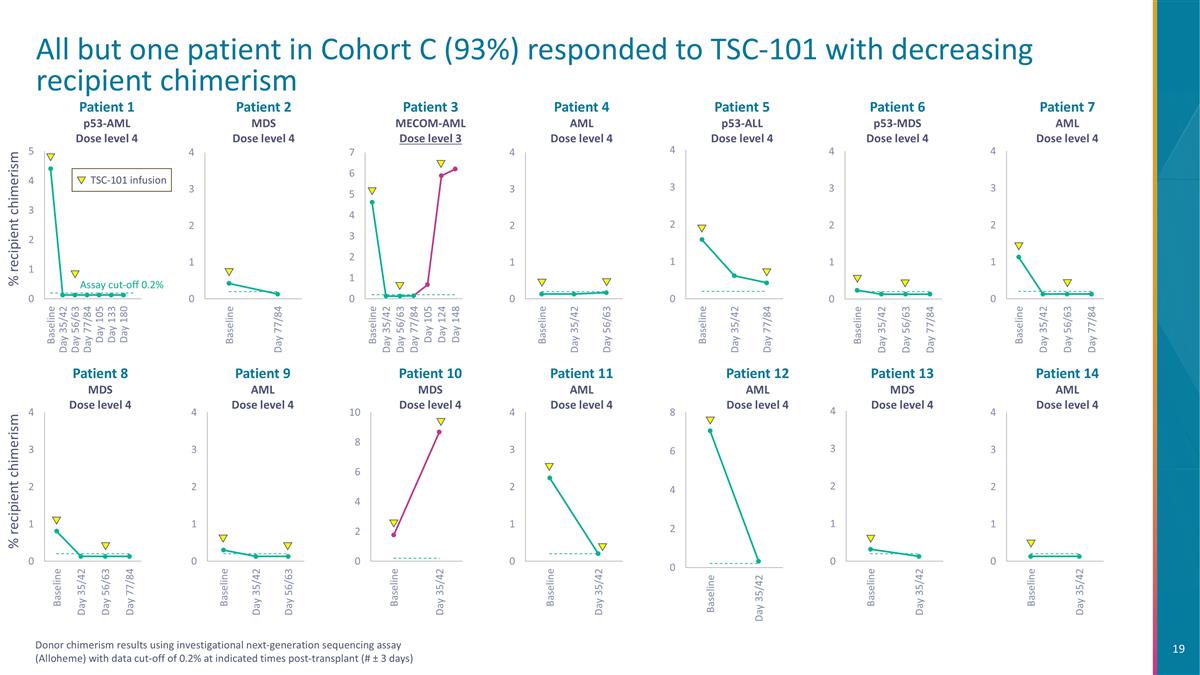
All but one patient in Cohort C (93%) responded to TSC-101 with decreasing recipient chimerism % recipient chimerism % recipient chimerism Donor chimerism results using investigational next-generation sequencing assay (Alloheme) with data cut-off of 0.2% at indicated times post-transplant (# ± 3 days) Assay cut-off 0.2% Patient 1 p53-AML Dose level 4 Patient 2 MDS Dose level 4 Patient 3 MECOM-AML Dose level 3 Patient 4 AML Dose level 4 Patient 5 p53-ALL Dose level 4 Patient 6 p53-MDS Dose level 4 Patient 7 AML Dose level 4 Patient 8 MDS Dose level 4 Patient 9 AML Dose level 4 Patient 10 MDS Dose level 4 Patient 11 AML Dose level 4 Patient 12 AML Dose level 4 Patient 13 MDS Dose level 4 Patient 14 AML Dose level 4 TSC-101 infusion
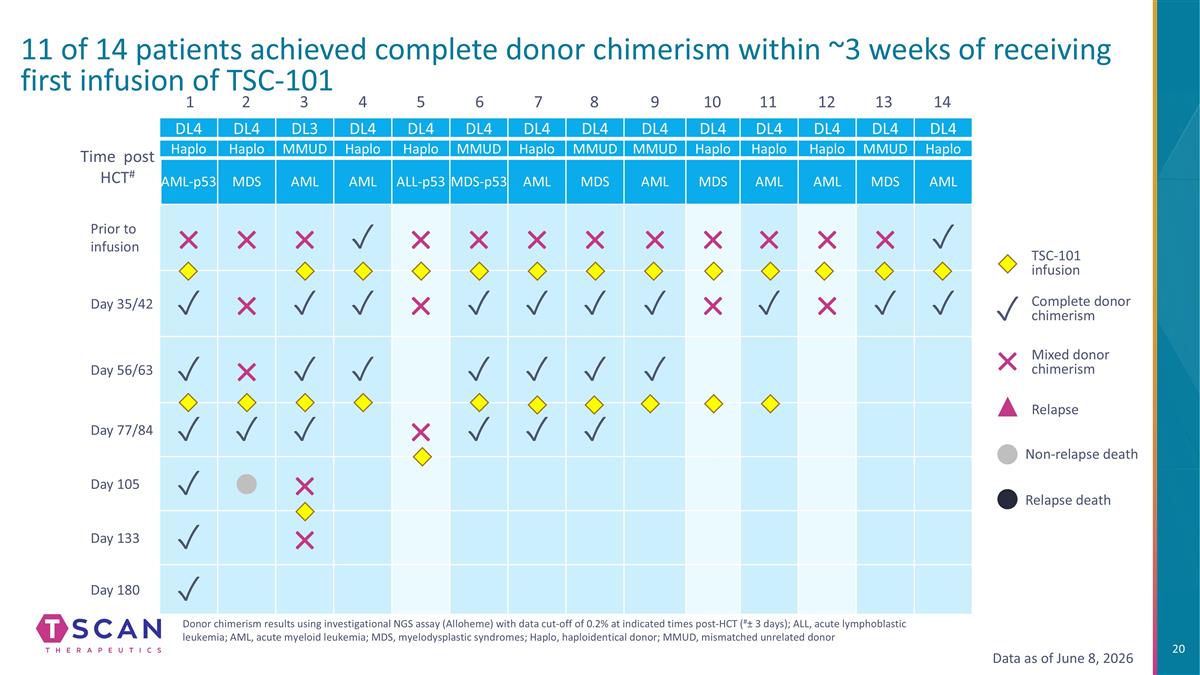
04-022 07-012 13-014 14-003 25-016 13-016 14-004 13-018 13-021 07-013 16-003 27-004 13-017 13-019 04-022 07-012 13-014 14-003 25-016 13-016 14-004 13-018 13-021 07-013 27-004 16-003 13-017 13-019 1 2 3 4 5 6 7 8 9 10 11 12 13 14 11 of 14 patients achieved complete donor chimerism within ~3 weeks of receiving first infusion of TSC-101 DL4 DL4 DL3 DL4 DL4 DL4 DL4 DL4 DL4 DL4 DL4 DL4 DL4 DL4 Haplo Haplo MMUD Haplo Haplo MMUD Haplo MMUD MMUD Haplo Haplo Haplo MMUD Haplo AML-p53 MDS AML AML ALL-p53 MDS-p53 AML MDS AML MDS AML AML MDS AML Prior to infusion × × × ✓ × × × × × × × × × ✓ Day 35/42 ✓ × ✓ ✓ × ✓ ✓ ✓ ✓ × ✓ × ✓ ✓ Day 56/63 ✓ × ✓ ✓ ✓ ✓ ✓ ✓ Day 77/84 ✓ ✓ ✓ × ✓ ✓ ✓ Day 105 ✓ ● × Day 133 ✓ × Day 180 ✓ Time post HCT# Donor chimerism results using investigational NGS assay (Alloheme) with data cut-off of 0.2% at indicated times post-HCT (#± 3 days); ALL, acute lymphoblastic leukemia; AML, acute myeloid leukemia; MDS, myelodysplastic syndromes; Haplo, haploidentical donor; MMUD, mismatched unrelated donor TSC-101 infusion Complete donor chimerism Mixed donor chimerism × ✓ ● Non-relapse death ● Relapse Relapse death Data as of June 8, 2026
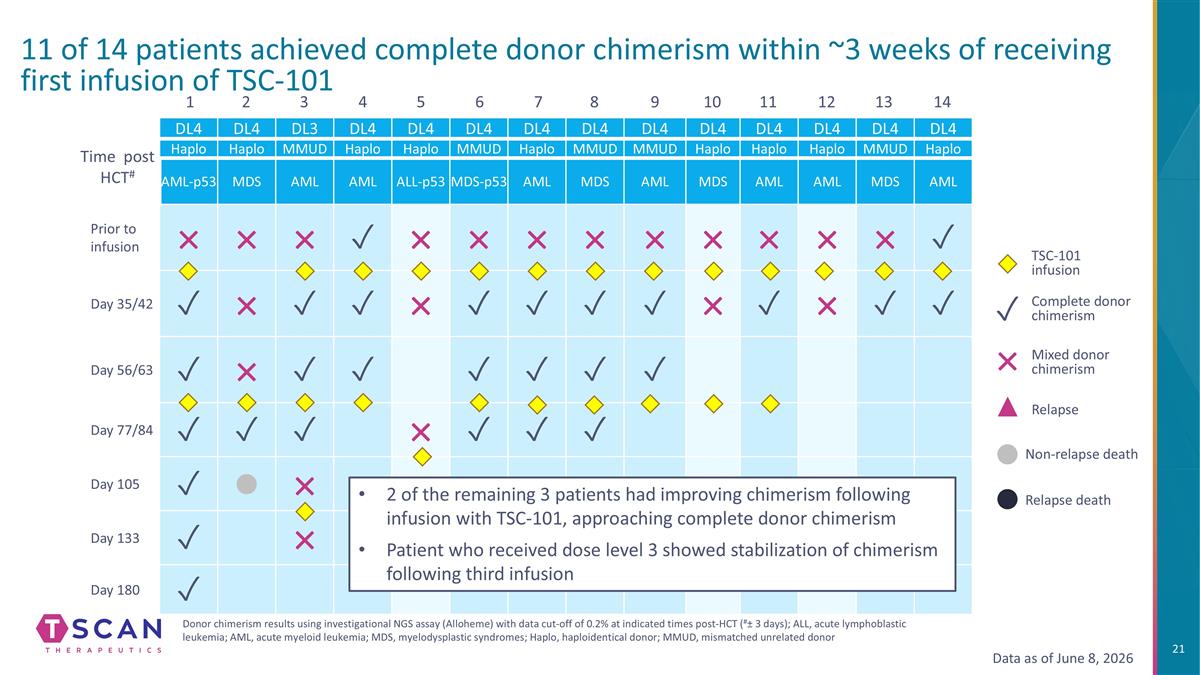
04-022 07-012 13-014 14-003 25-016 13-016 14-004 13-018 13-021 07-013 16-003 27-004 13-017 13-019 04-022 07-012 13-014 14-003 25-016 13-016 14-004 13-018 13-021 07-013 27-004 16-003 13-017 13-019 1 2 3 4 5 6 7 8 9 10 11 12 13 14 11 of 14 patients achieved complete donor chimerism within ~3 weeks of receiving first infusion of TSC-101 DL4 DL4 DL3 DL4 DL4 DL4 DL4 DL4 DL4 DL4 DL4 DL4 DL4 DL4 Haplo Haplo MMUD Haplo Haplo MMUD Haplo MMUD MMUD Haplo Haplo Haplo MMUD Haplo AML-p53 MDS AML AML ALL-p53 MDS-p53 AML MDS AML MDS AML AML MDS AML Prior to infusion × × × ✓ × × × × × × × × × ✓ Day 35/42 ✓ × ✓ ✓ × ✓ ✓ ✓ ✓ × ✓ × ✓ ✓ Day 56/63 ✓ × ✓ ✓ ✓ ✓ ✓ ✓ Day 77/84 ✓ ✓ ✓ × ✓ ✓ ✓ Day 105 ✓ ● × Day 133 ✓ × Day 180 ✓ Time post HCT# Donor chimerism results using investigational NGS assay (Alloheme) with data cut-off of 0.2% at indicated times post-HCT (#± 3 days); ALL, acute lymphoblastic leukemia; AML, acute myeloid leukemia; MDS, myelodysplastic syndromes; Haplo, haploidentical donor; MMUD, mismatched unrelated donor TSC-101 infusion Complete donor chimerism Mixed donor chimerism × ✓ ● Non-relapse death ● Relapse Relapse death Data as of June 8, 2026 2 of the remaining 3 patients had improving chimerism following infusion with TSC-101, approaching complete donor chimerism Patient who received dose level 3 showed stabilization of chimerism following third infusion
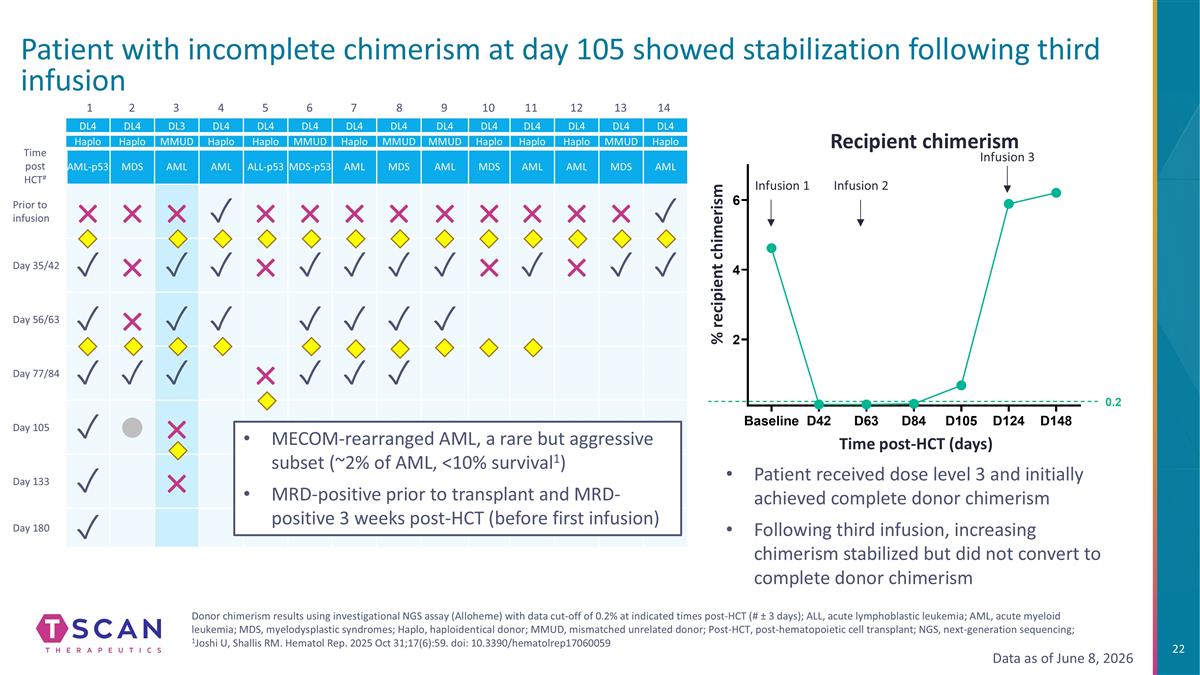
Patient with incomplete chimerism at day 105 showed stabilization following third infusion DL4 DL4 DL3 DL4 DL4 DL4 DL4 DL4 DL4 DL4 DL4 DL4 DL4 DL4 Haplo Haplo MMUD Haplo Haplo MMUD Haplo MMUD MMUD Haplo Haplo Haplo MMUD Haplo AML-p53 MDS AML AML ALL-p53 MDS-p53 AML MDS AML MDS AML AML MDS AML Prior to infusion × × × ✓ × × × × × × × × × ✓ Day 35/42 ✓ × ✓ ✓ × ✓ ✓ ✓ ✓ × ✓ × ✓ ✓ Day 56/63 ✓ × ✓ ✓ ✓ ✓ ✓ ✓ Day 77/84 ✓ ✓ ✓ × ✓ ✓ ✓ Day 105 ✓ ● × Day 133 ✓ × Day 180 ✓ Time post HCT# Infusion 1 Infusion 3 Infusion 2 Data as of June 8, 2026 Donor chimerism results using investigational NGS assay (Alloheme) with data cut-off of 0.2% at indicated times post-HCT (# ± 3 days); ALL, acute lymphoblastic leukemia; AML, acute myeloid leukemia; MDS, myelodysplastic syndromes; Haplo, haploidentical donor; MMUD, mismatched unrelated donor; Post-HCT, post-hematopoietic cell transplant; NGS, next-generation sequencing; 1Joshi U, Shallis RM. Hematol Rep. 2025 Oct 31;17(6):59. doi: 10.3390/hematolrep17060059 Time post-HCT (days) Recipient chimerism % recipient chimerism Patient received dose level 3 and initially achieved complete donor chimerism Following third infusion, increasing chimerism stabilized but did not convert to complete donor chimerism MECOM-rearranged AML, a rare but aggressive subset (~2% of AML, <10% survival1) MRD-positive prior to transplant and MRD-positive 3 weeks post-HCT (before first infusion) 1 2 3 4 5 6 7 8 9 10 11 12 13 14
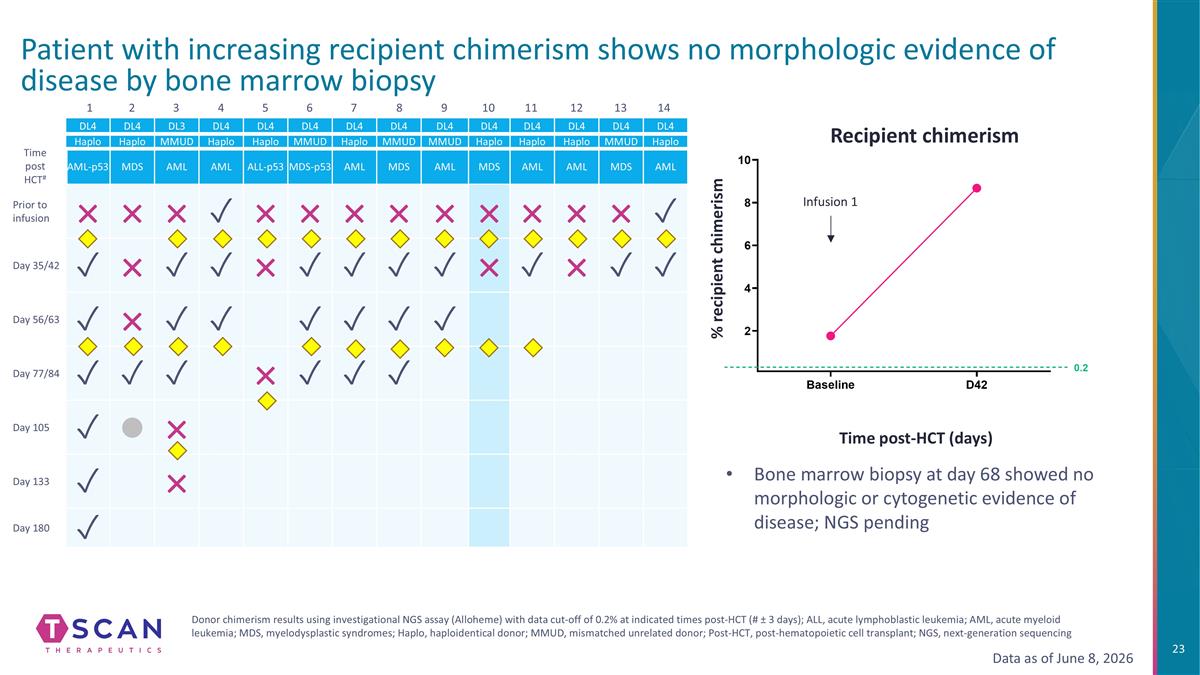
Patient with increasing recipient chimerism shows no morphologic evidence of disease by bone marrow biopsy DL4 DL4 DL3 DL4 DL4 DL4 DL4 DL4 DL4 DL4 DL4 DL4 DL4 DL4 Haplo Haplo MMUD Haplo Haplo MMUD Haplo MMUD MMUD Haplo Haplo Haplo MMUD Haplo AML-p53 MDS AML AML ALL-p53 MDS-p53 AML MDS AML MDS AML AML MDS AML Prior to infusion × × × ✓ × × × × × × × × × ✓ Day 35/42 ✓ × ✓ ✓ × ✓ ✓ ✓ ✓ × ✓ × ✓ ✓ Day 56/63 ✓ × ✓ ✓ ✓ ✓ ✓ ✓ Day 77/84 ✓ ✓ ✓ × ✓ ✓ ✓ Day 105 ✓ ● × Day 133 ✓ × Day 180 ✓ Time post HCT# Infusion 1 Donor chimerism results using investigational NGS assay (Alloheme) with data cut-off of 0.2% at indicated times post-HCT (# ± 3 days); ALL, acute lymphoblastic leukemia; AML, acute myeloid leukemia; MDS, myelodysplastic syndromes; Haplo, haploidentical donor; MMUD, mismatched unrelated donor; Post-HCT, post-hematopoietic cell transplant; NGS, next-generation sequencing Data as of June 8, 2026 Time post-HCT (days) Recipient chimerism % recipient chimerism Bone marrow biopsy at day 68 showed no morphologic or cytogenetic evidence of disease; NGS pending 1 2 3 4 5 6 7 8 9 10 11 12 13 14
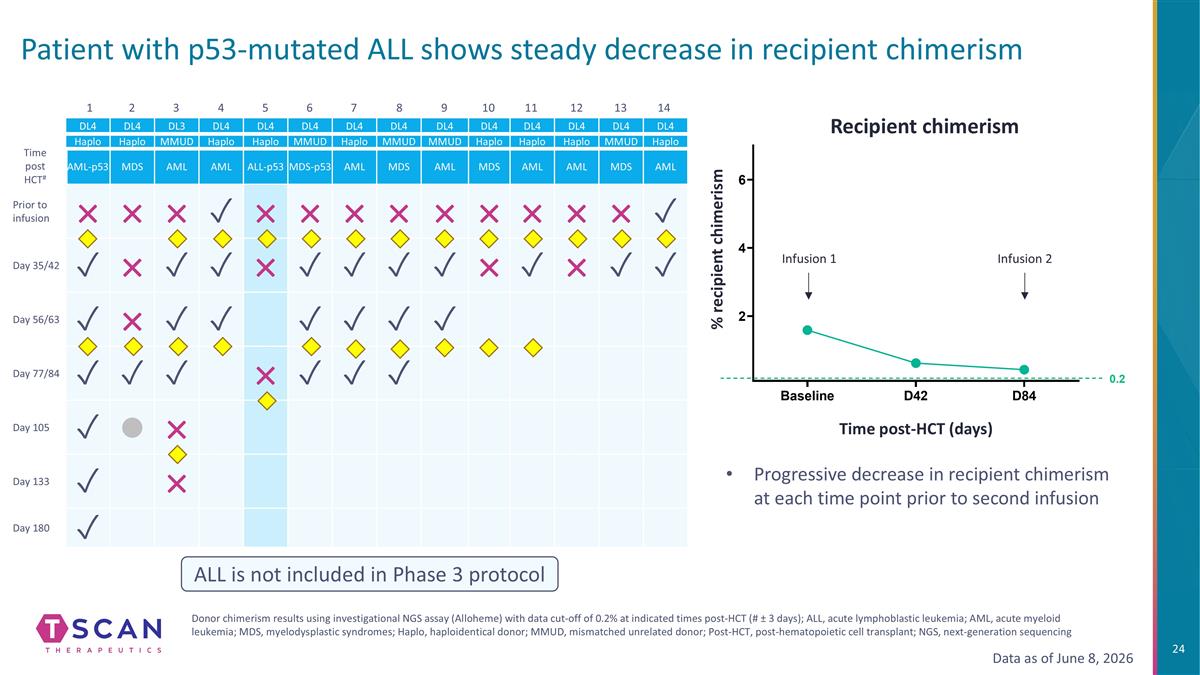
Patient with p53-mutated ALL shows steady decrease in recipient chimerism DL4 DL4 DL3 DL4 DL4 DL4 DL4 DL4 DL4 DL4 DL4 DL4 DL4 DL4 Haplo Haplo MMUD Haplo Haplo MMUD Haplo MMUD MMUD Haplo Haplo Haplo MMUD Haplo AML-p53 MDS AML AML ALL-p53 MDS-p53 AML MDS AML MDS AML AML MDS AML Prior to infusion × × × ✓ × × × × × × × × × ✓ Day 35/42 ✓ × ✓ ✓ × ✓ ✓ ✓ ✓ × ✓ × ✓ ✓ Day 56/63 ✓ × ✓ ✓ ✓ ✓ ✓ ✓ Day 77/84 ✓ ✓ ✓ × ✓ ✓ ✓ Day 105 ✓ ● × Day 133 ✓ × Day 180 ✓ Time post HCT# Infusion 1 Infusion 2 Time post-HCT (days) Data as of June 8, 2026 Recipient chimerism % recipient chimerism Donor chimerism results using investigational NGS assay (Alloheme) with data cut-off of 0.2% at indicated times post-HCT (# ± 3 days); ALL, acute lymphoblastic leukemia; AML, acute myeloid leukemia; MDS, myelodysplastic syndromes; Haplo, haploidentical donor; MMUD, mismatched unrelated donor; Post-HCT, post-hematopoietic cell transplant; NGS, next-generation sequencing ALL is not included in Phase 3 protocol Progressive decrease in recipient chimerism at each time point prior to second infusion 1 2 3 4 5 6 7 8 9 10 11 12 13 14
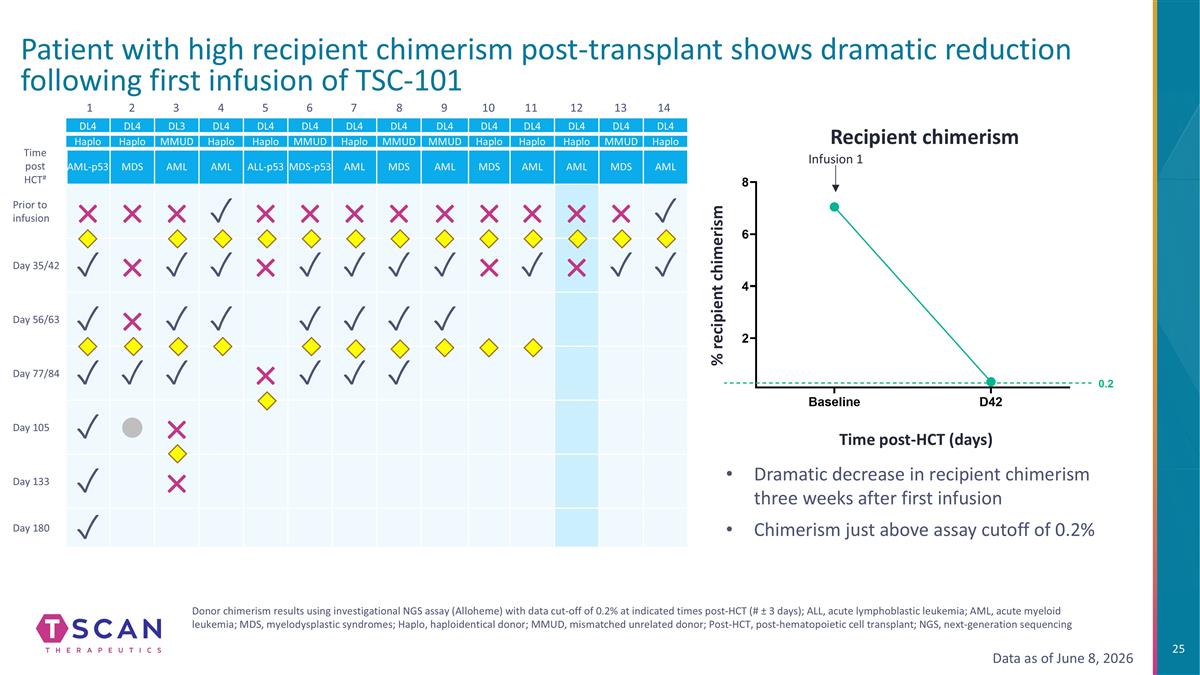
Patient with high recipient chimerism post-transplant shows dramatic reduction following first infusion of TSC-101 DL4 DL4 DL3 DL4 DL4 DL4 DL4 DL4 DL4 DL4 DL4 DL4 DL4 DL4 Haplo Haplo MMUD Haplo Haplo MMUD Haplo MMUD MMUD Haplo Haplo Haplo MMUD Haplo AML-p53 MDS AML AML ALL-p53 MDS-p53 AML MDS AML MDS AML AML MDS AML Prior to infusion × × × ✓ × × × × × × × × × ✓ Day 35/42 ✓ × ✓ ✓ × ✓ ✓ ✓ ✓ × ✓ × ✓ ✓ Day 56/63 ✓ × ✓ ✓ ✓ ✓ ✓ ✓ Day 77/84 ✓ ✓ ✓ × ✓ ✓ ✓ Day 105 ✓ ● × Day 133 ✓ × Day 180 ✓ Time post HCT# Infusion 1 Data as of June 8, 2026 Donor chimerism results using investigational NGS assay (Alloheme) with data cut-off of 0.2% at indicated times post-HCT (# ± 3 days); ALL, acute lymphoblastic leukemia; AML, acute myeloid leukemia; MDS, myelodysplastic syndromes; Haplo, haploidentical donor; MMUD, mismatched unrelated donor; Post-HCT, post-hematopoietic cell transplant; NGS, next-generation sequencing Time post-HCT (days) Recipient chimerism % recipient chimerism Dramatic decrease in recipient chimerism three weeks after first infusion Chimerism just above assay cutoff of 0.2% 1 2 3 4 5 6 7 8 9 10 11 12 13 14
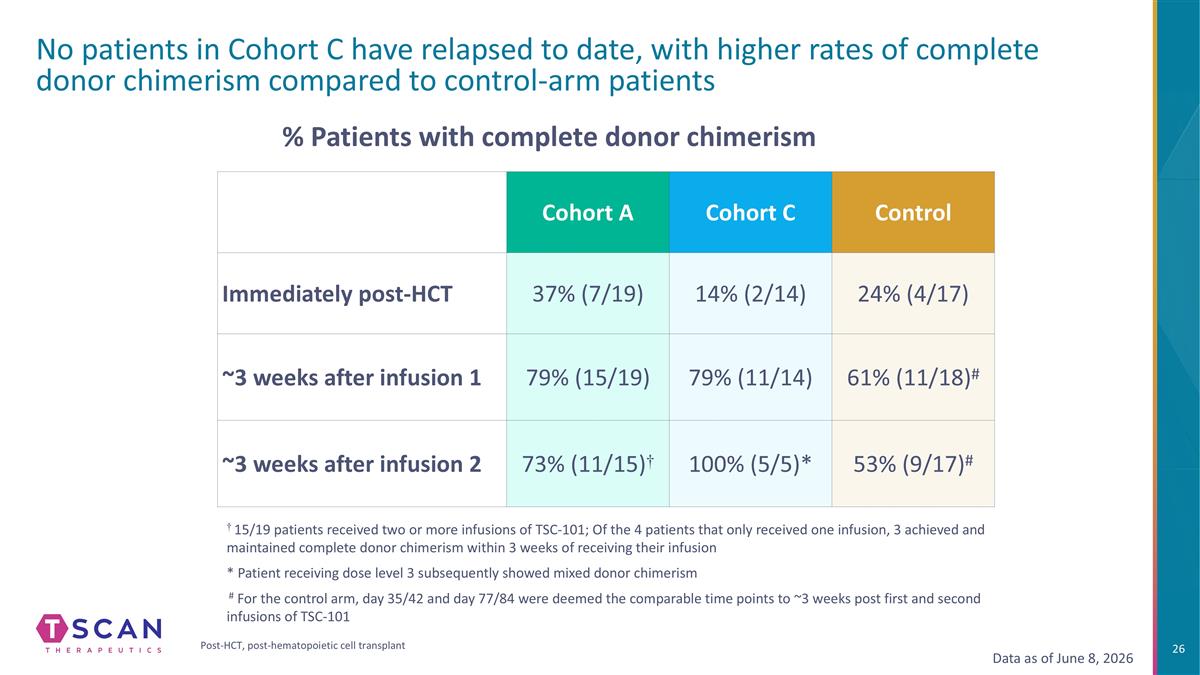
No patients in Cohort C have relapsed to date, with higher rates of complete donor chimerism compared to control-arm patients Cohort A Cohort C Control Immediately post-HCT 37% (7/19) 14% (2/14) 24% (4/17) ~3 weeks after infusion 1 79% (15/19) 79% (11/14) 61% (11/18)# ~3 weeks after infusion 2 73% (11/15)† 100% (5/5)* 53% (9/17)# % Patients with complete donor chimerism Post-HCT, post-hematopoietic cell transplant Data as of June 8, 2026 † 15/19 patients received two or more infusions of TSC-101; Of the 4 patients that only received one infusion, 3 achieved and maintained complete donor chimerism within 3 weeks of receiving their infusion * Patient receiving dose level 3 subsequently showed mixed donor chimerism # For the control arm, day 35/42 and day 77/84 were deemed the comparable time points to ~3 weeks post first and second infusions of TSC-101
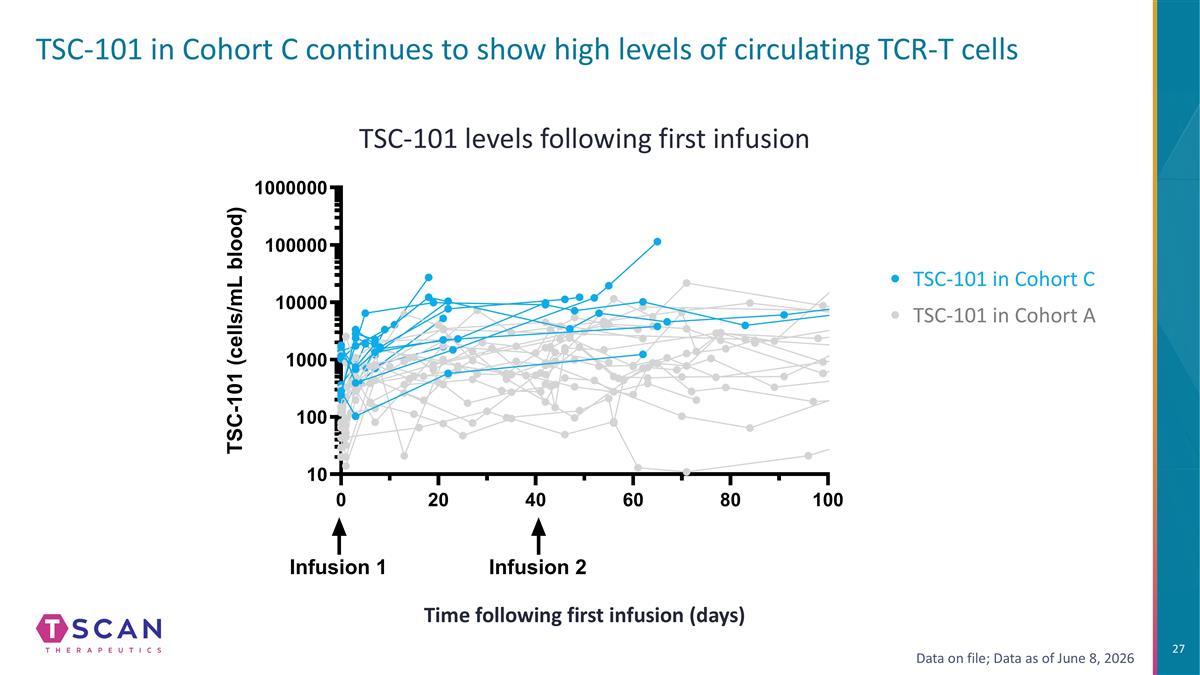
TSC-101 in Cohort C continues to show high levels of circulating TCR-T cells TSC-101 in Cohort C TSC-101 in Cohort A TSC-101 levels following first infusion Time following first infusion (days) Data on file; Data as of June 8, 2026
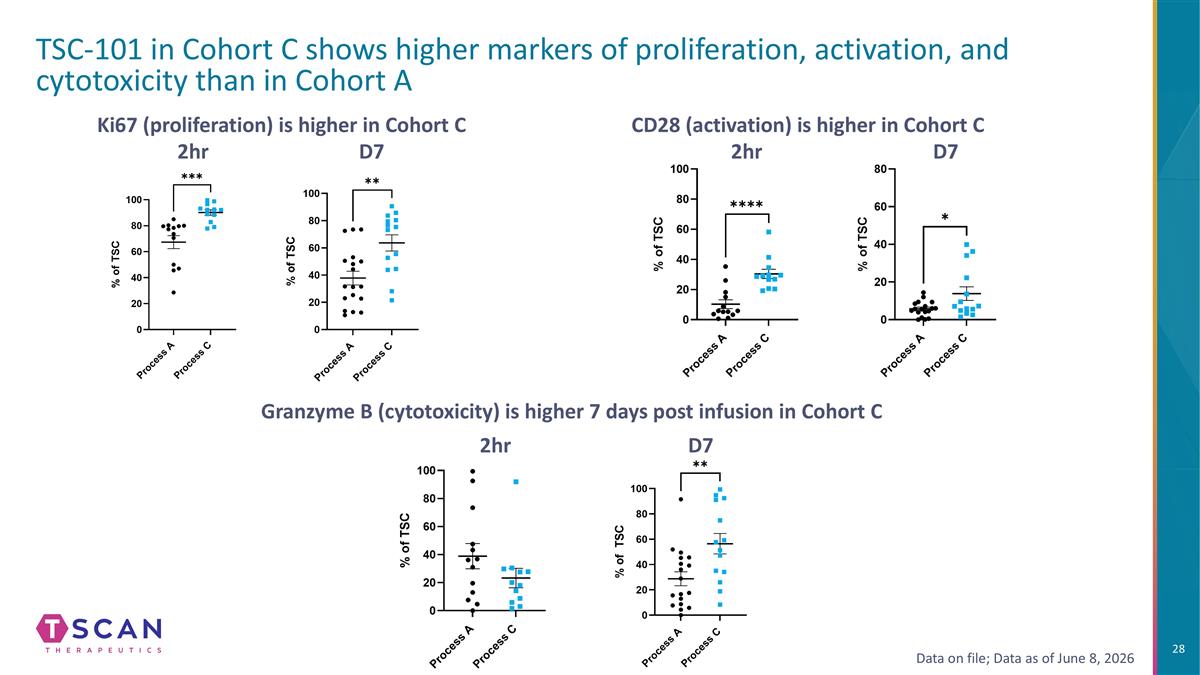
TSC-101 in Cohort C shows higher markers of proliferation, activation, and cytotoxicity than in Cohort A 2hr D7 CD28 (activation) is higher in Cohort C Granzyme B (cytotoxicity) is higher 7 days post infusion in Cohort C 2hr D7 Ki67 (proliferation) is higher in Cohort C 2hr D7 Data on file; Data as of June 8, 2026
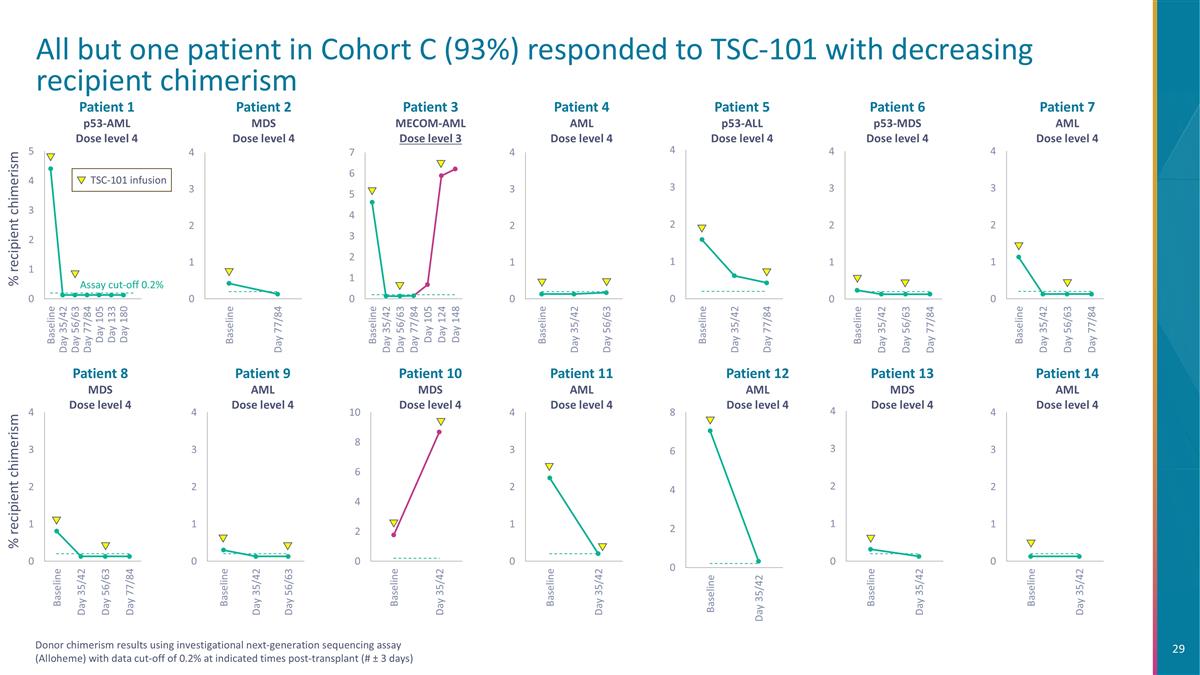
All but one patient in Cohort C (93%) responded to TSC-101 with decreasing recipient chimerism % recipient chimerism % recipient chimerism Donor chimerism results using investigational next-generation sequencing assay (Alloheme) with data cut-off of 0.2% at indicated times post-transplant (# ± 3 days) Assay cut-off 0.2% Patient 1 p53-AML Dose level 4 Patient 2 MDS Dose level 4 Patient 3 MECOM-AML Dose level 3 Patient 4 AML Dose level 4 Patient 5 p53-ALL Dose level 4 Patient 6 p53-MDS Dose level 4 Patient 7 AML Dose level 4 Patient 8 MDS Dose level 4 Patient 9 AML Dose level 4 Patient 10 MDS Dose level 4 Patient 11 AML Dose level 4 Patient 12 AML Dose level 4 Patient 13 MDS Dose level 4 Patient 14 AML Dose level 4 TSC-101 infusion
Heme Program: Review of Cohort C Data
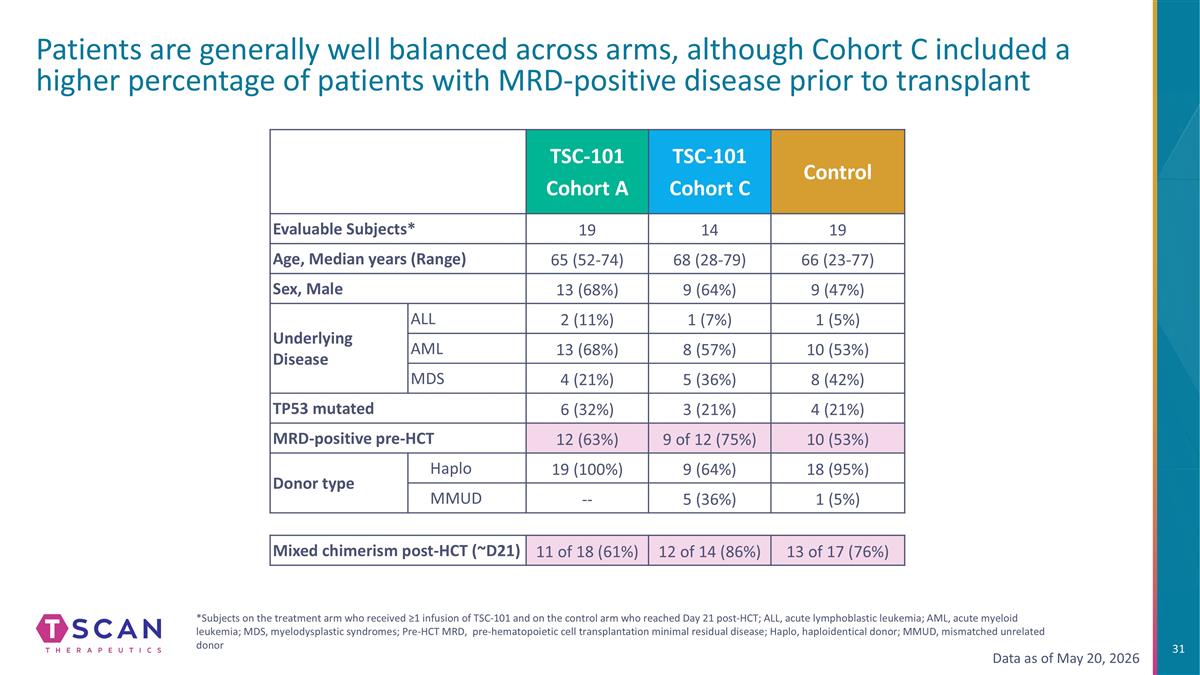
Patients are generally well balanced across arms, although Cohort C included a higher percentage of patients with MRD-positive disease prior to transplant TSC-101 Cohort A TSC-101 Cohort C Control Evaluable Subjects* 19 14 19 Age, Median years (Range) 65 (52-74) 68 (28-79) 66 (23-77) Sex, Male 13 (68%) 9 (64%) 9 (47%) Underlying Disease ALL 2 (11%) 1 (7%) 1 (5%) AML 13 (68%) 8 (57%) 10 (53%) MDS 4 (21%) 5 (36%) 8 (42%) TP53 mutated 6 (32%) 3 (21%) 4 (21%) MRD-positive pre-HCT 12 (63%) 9 of 12 (75%) 10 (53%) Donor type Haplo 19 (100%) 9 (64%) 18 (95%) MMUD -- 5 (36%) 1 (5%) Data as of May 20, 2026 *Subjects on the treatment arm who received ≥1 infusion of TSC-101 and on the control arm who reached Day 21 post-HCT; ALL, acute lymphoblastic leukemia; AML, acute myeloid leukemia; MDS, myelodysplastic syndromes; Pre-HCT MRD, pre-hematopoietic cell transplantation minimal residual disease; Haplo, haploidentical donor; MMUD, mismatched unrelated donor Mixed chimerism post-HCT (~D21) 11 of 18 (61%) 12 of 14 (86%) 13 of 17 (76%)
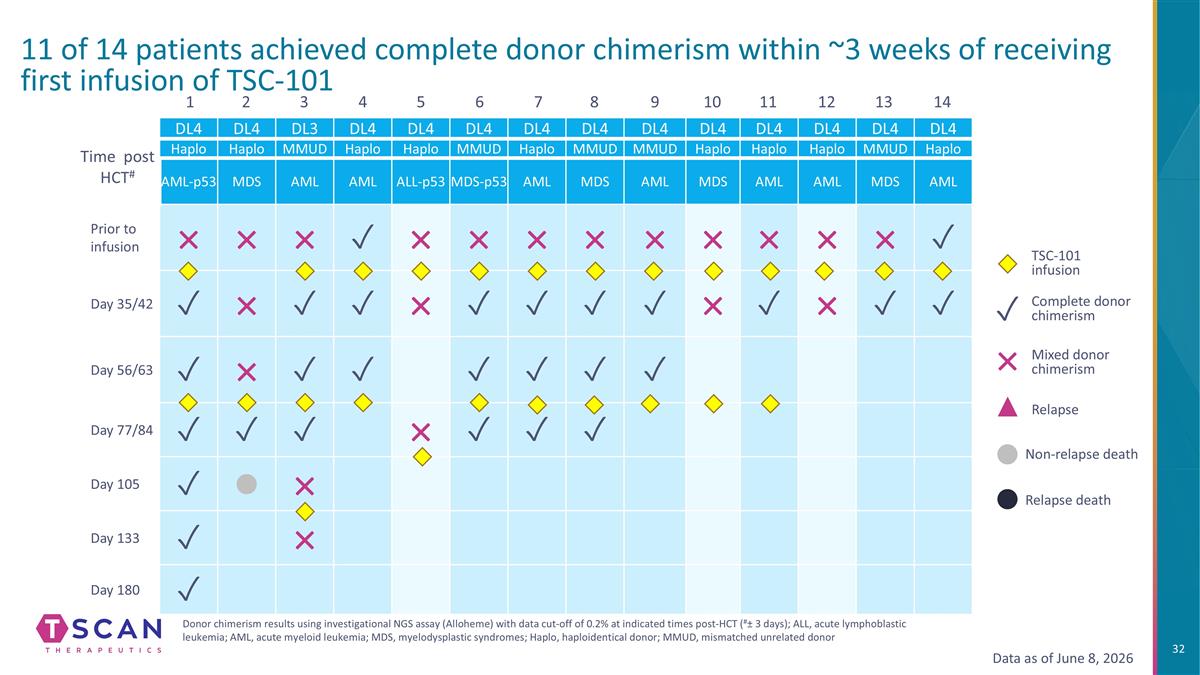
04-022 07-012 13-014 14-003 25-016 13-016 14-004 13-018 13-021 07-013 16-003 27-004 13-017 13-019 04-022 07-012 13-014 14-003 25-016 13-016 14-004 13-018 13-021 07-013 27-004 16-003 13-017 13-019 1 2 3 4 5 6 7 8 9 10 11 12 13 14 11 of 14 patients achieved complete donor chimerism within ~3 weeks of receiving first infusion of TSC-101 DL4 DL4 DL3 DL4 DL4 DL4 DL4 DL4 DL4 DL4 DL4 DL4 DL4 DL4 Haplo Haplo MMUD Haplo Haplo MMUD Haplo MMUD MMUD Haplo Haplo Haplo MMUD Haplo AML-p53 MDS AML AML ALL-p53 MDS-p53 AML MDS AML MDS AML AML MDS AML Prior to infusion × × × ✓ × × × × × × × × × ✓ Day 35/42 ✓ × ✓ ✓ × ✓ ✓ ✓ ✓ × ✓ × ✓ ✓ Day 56/63 ✓ × ✓ ✓ ✓ ✓ ✓ ✓ Day 77/84 ✓ ✓ ✓ × ✓ ✓ ✓ Day 105 ✓ ● × Day 133 ✓ × Day 180 ✓ Time post HCT# Donor chimerism results using investigational NGS assay (Alloheme) with data cut-off of 0.2% at indicated times post-HCT (#± 3 days); ALL, acute lymphoblastic leukemia; AML, acute myeloid leukemia; MDS, myelodysplastic syndromes; Haplo, haploidentical donor; MMUD, mismatched unrelated donor TSC-101 infusion Complete donor chimerism Mixed donor chimerism × ✓ ● Non-relapse death ● Relapse Relapse death Data as of June 8, 2026
Heme Phase 3 trial design Targeting residual disease to prevent relapse in patients undergoing allogeneic HCT
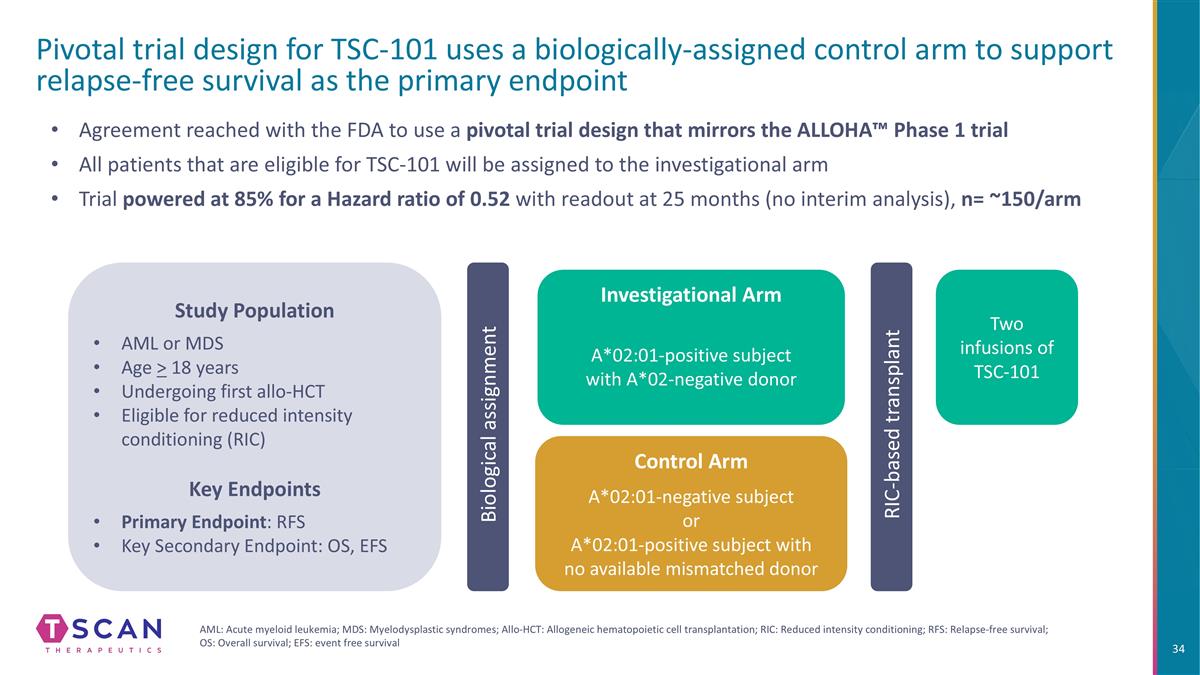
Pivotal trial design for TSC-101 uses a biologically-assigned control arm to support relapse-free survival as the primary endpoint Biological assignment Two infusions of TSC-101 RIC-based transplant Study Population AML or MDS Age > 18 years Undergoing first allo-HCT Eligible for reduced intensity conditioning (RIC) Key Endpoints Primary Endpoint: RFS Key Secondary Endpoint: OS, EFS AML: Acute myeloid leukemia; MDS: Myelodysplastic syndromes; Allo-HCT: Allogeneic hematopoietic cell transplantation; RIC: Reduced intensity conditioning; RFS: Relapse-free survival; OS: Overall survival; EFS: event free survival Investigational Arm A*02:01-positive subject with A*02-negative donor Control Arm A*02:01-negative subject or A*02:01-positive subject with no available mismatched donor Agreement reached with the FDA to use a pivotal trial design that mirrors the ALLOHA™ Phase 1 trial All patients that are eligible for TSC-101 will be assigned to the investigational arm Trial powered at 85% for a Hazard ratio of 0.52 with readout at 25 months (no interim analysis), n= ~150/arm
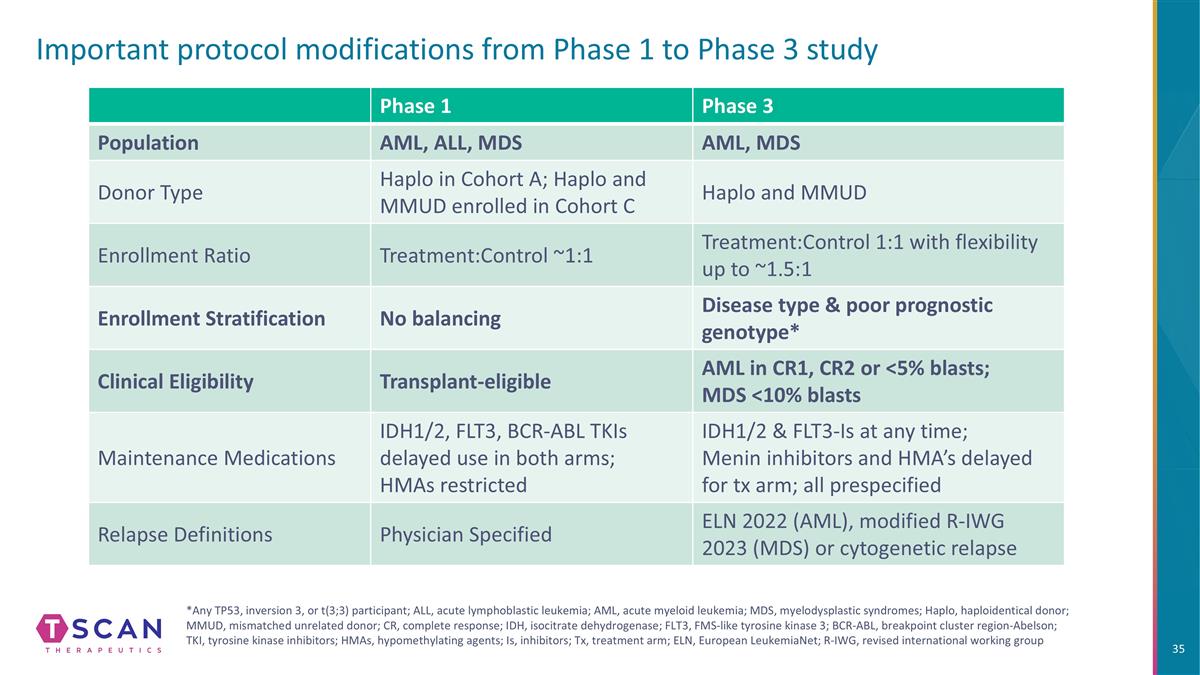
Important protocol modifications from Phase 1 to Phase 3 study Phase 1 Phase 3 Population AML, ALL, MDS AML, MDS Donor Type Haplo in Cohort A; Haplo and MMUD enrolled in Cohort C Haplo and MMUD Enrollment Ratio Treatment:Control ~1:1 Treatment:Control 1:1 with flexibility up to ~1.5:1 Enrollment Stratification No balancing Disease type & poor prognostic genotype* Clinical Eligibility Transplant-eligible AML in CR1, CR2 or <5% blasts; MDS <10% blasts Maintenance Medications IDH1/2, FLT3, BCR-ABL TKIs delayed use in both arms; HMAs restricted IDH1/2 & FLT3-Is at any time; Menin inhibitors and HMA’s delayed for tx arm; all prespecified Relapse Definitions Physician Specified ELN 2022 (AML), modified R-IWG 2023 (MDS) or cytogenetic relapse *Any TP53, inversion 3, or t(3;3) participant; ALL, acute lymphoblastic leukemia; AML, acute myeloid leukemia; MDS, myelodysplastic syndromes; Haplo, haploidentical donor; MMUD, mismatched unrelated donor; CR, complete response; IDH, isocitrate dehydrogenase; FLT3, FMS-like tyrosine kinase 3; BCR-ABL, breakpoint cluster region-Abelson; TKI, tyrosine kinase inhibitors; HMAs, hypomethylating agents; Is, inhibitors; Tx, treatment arm; ELN, European LeukemiaNet; R-IWG, revised international working group
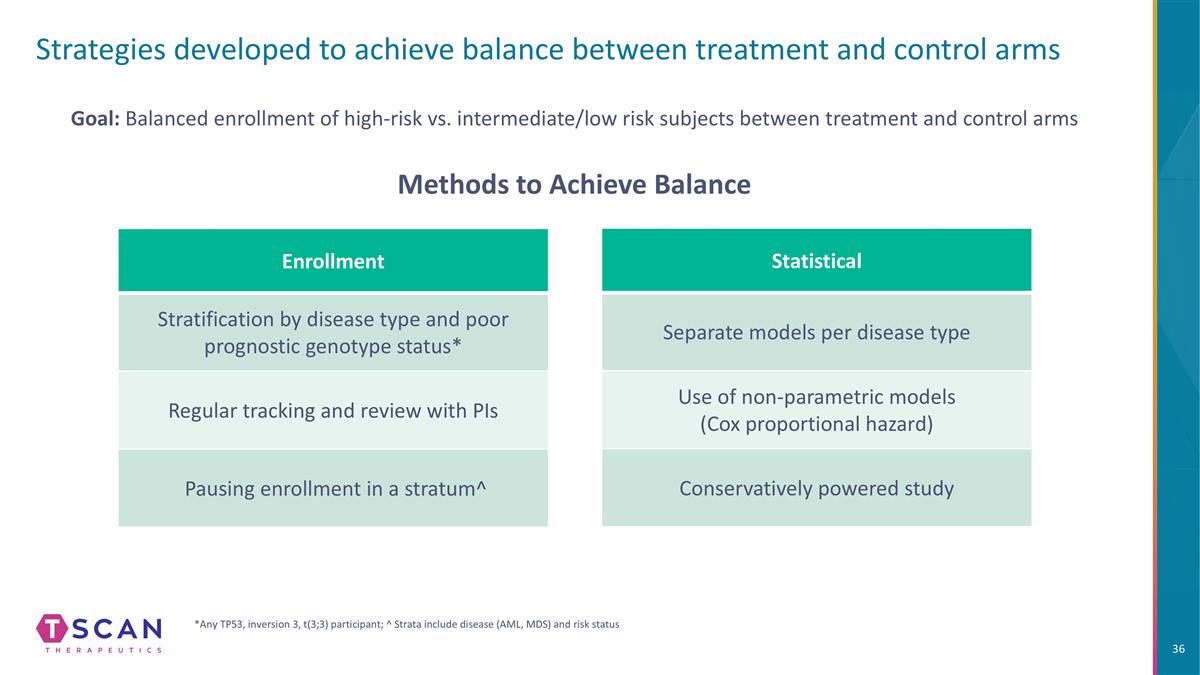
Strategies developed to achieve balance between treatment and control arms Goal: Balanced enrollment of high-risk vs. intermediate/low risk subjects between treatment and control arms *Any TP53, inversion 3, t(3;3) participant; ^ Strata include disease (AML, MDS) and risk status Enrollment Stratification by disease type and poor prognostic genotype status* Regular tracking and review with PIs Pausing enrollment in a stratum^ Methods to Achieve Balance Statistical Separate models per disease type Use of non-parametric models (Cox proportional hazard) Conservatively powered study
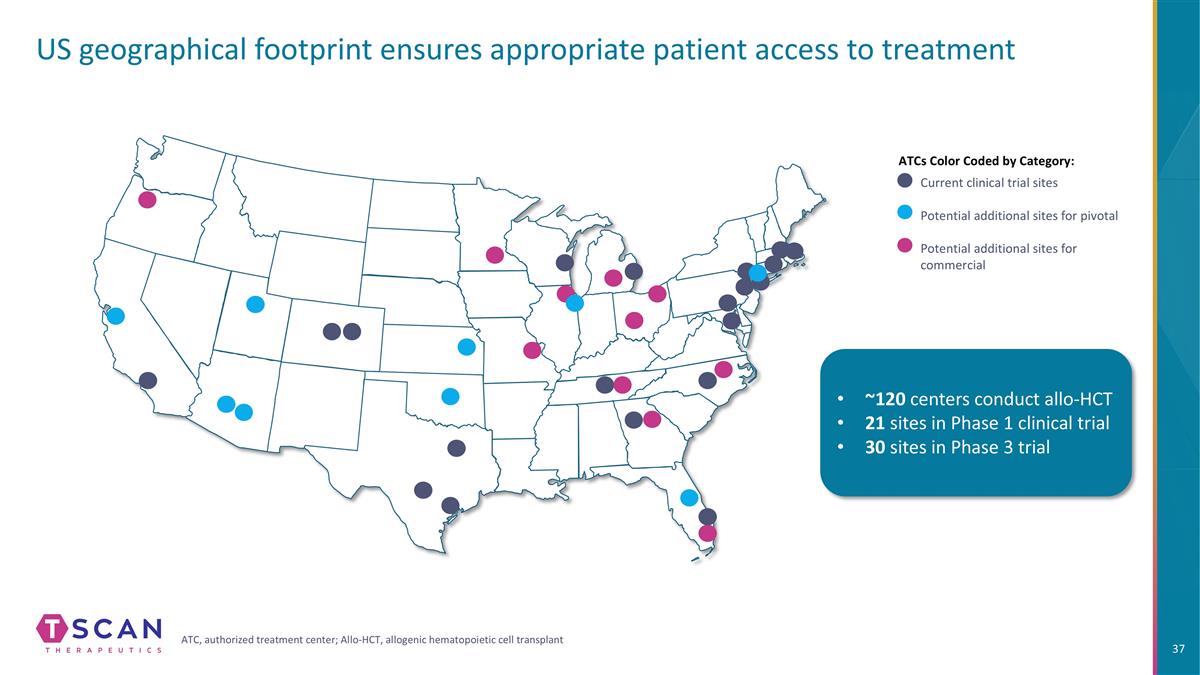
US geographical footprint ensures appropriate patient access to treatment ~120 centers conduct allo-HCT 21 sites in Phase 1 clinical trial 30 sites in Phase 3 trial ATCs Color Coded by Category: Current clinical trial sites Potential additional sites for pivotal Potential additional sites for commercial ATC, authorized treatment center; Allo-HCT, allogenic hematopoietic cell transplant
Heme program: HLA and indication expansion
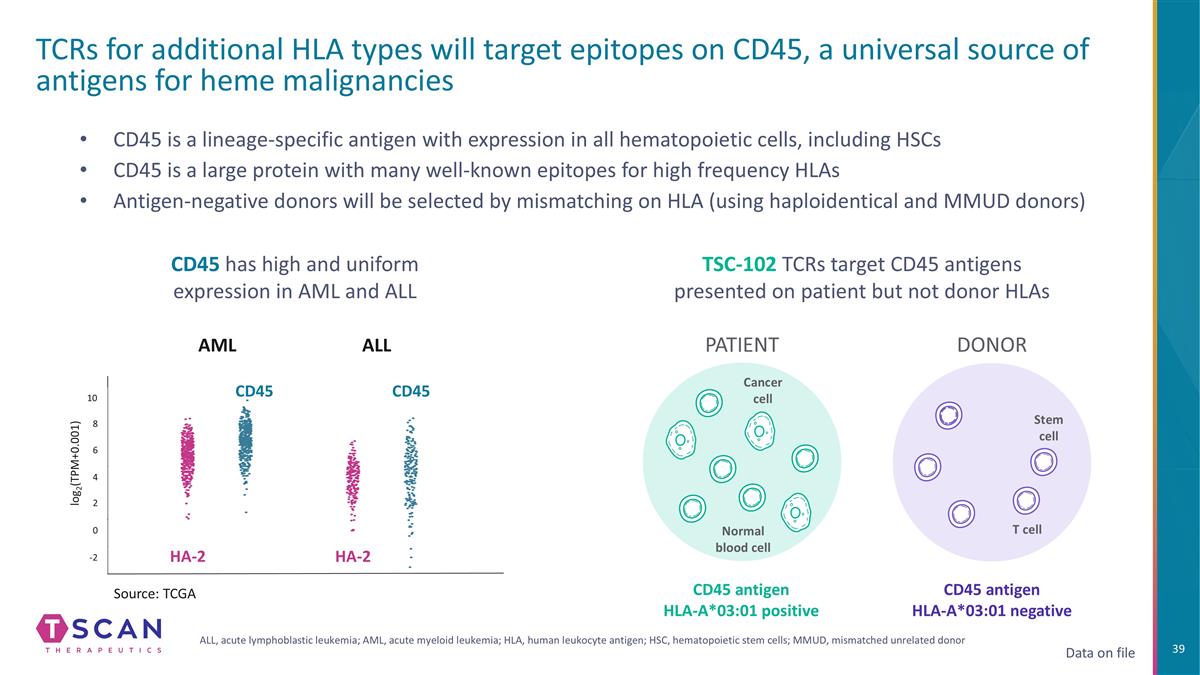
CD45 is a lineage-specific antigen with expression in all hematopoietic cells, including HSCs CD45 is a large protein with many well-known epitopes for high frequency HLAs Antigen-negative donors will be selected by mismatching on HLA (using haploidentical and MMUD donors) TCRs for additional HLA types will target epitopes on CD45, a universal source of antigens for heme malignancies CD45 has high and uniform expression in AML and ALL AML ALL -2 0 2 4 6 8 10 log2(TPM+0.001) Source: TCGA HA-2 HA-2 CD45 CD45 TSC-102 TCRs target CD45 antigens presented on patient but not donor HLAs PATIENT DONOR CD45 antigen HLA-A*03:01 positive CD45 antigen HLA-A*03:01 negative Stem cell T cell Cancer cell Normal blood cell Data on file ALL, acute lymphoblastic leukemia; AML, acute myeloid leukemia; HLA, human leukocyte antigen; HSC, hematopoietic stem cells; MMUD, mismatched unrelated donor
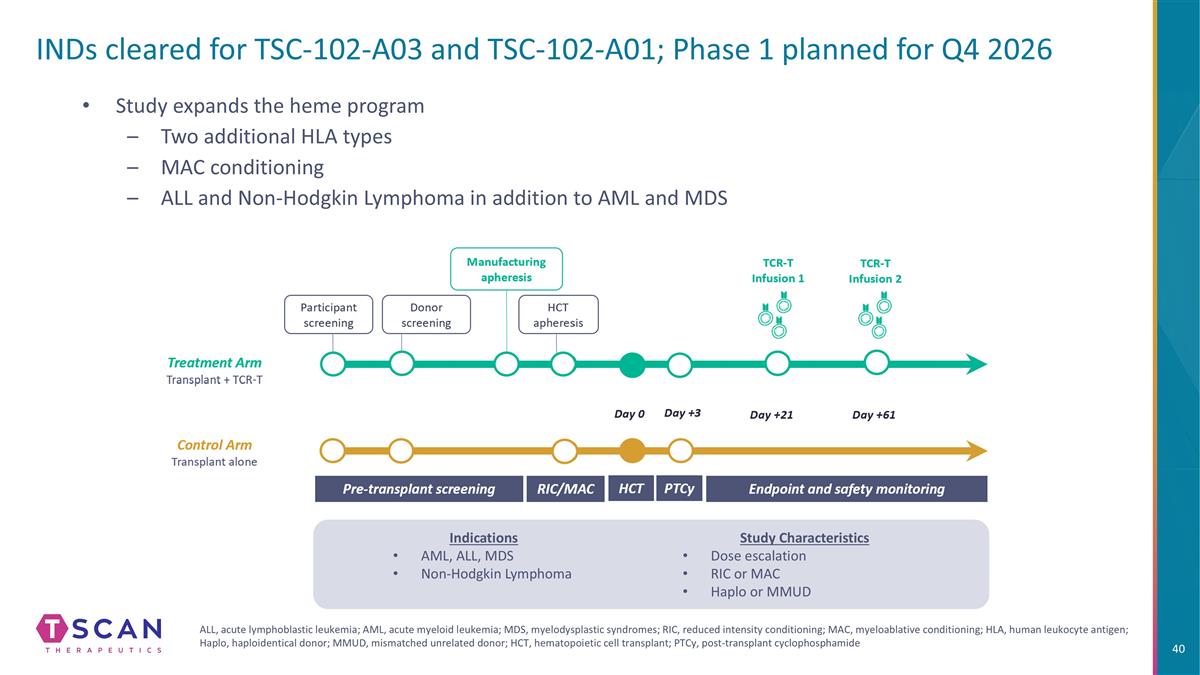
INDs cleared for TSC-102-A03 and TSC-102-A01; Phase 1 planned for Q4 2026 Indications AML, ALL, MDS Non-Hodgkin Lymphoma Study Characteristics Dose escalation RIC or MAC Haplo or MMUD Study expands the heme program Two additional HLA types MAC conditioning ALL and Non-Hodgkin Lymphoma in addition to AML and MDS ALL, acute lymphoblastic leukemia; AML, acute myeloid leukemia; MDS, myelodysplastic syndromes; RIC, reduced intensity conditioning; MAC, myeloablative conditioning; HLA, human leukocyte antigen; Haplo, haploidentical donor; MMUD, mismatched unrelated donor; HCT, hematopoietic cell transplant; PTCy, post-transplant cyclophosphamide
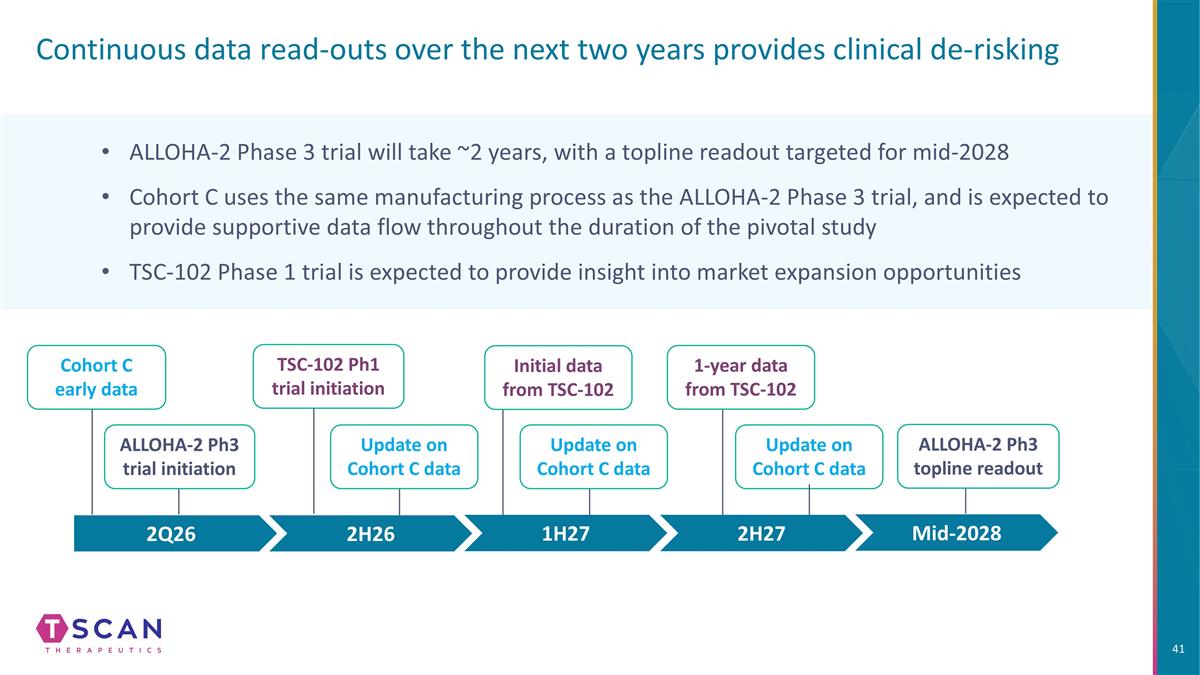
Continuous data read-outs over the next two years provides clinical de-risking ALLOHA-2 Ph3 topline readout Cohort C early data Update on Cohort C data TSC-102 Ph1 trial initiation Update on Cohort C data 1-year data from TSC-102 ALLOHA-2 Phase 3 trial will take ~2 years, with a topline readout targeted for mid-2028 Cohort C uses the same manufacturing process as the ALLOHA-2 Phase 3 trial, and is expected to provide supportive data flow throughout the duration of the pivotal study TSC-102 Phase 1 trial is expected to provide insight into market expansion opportunities 2Q26 2H26 1H27 2H27 ALLOHA-2 Ph3 trial initiation Mid-2028 Update on Cohort C data Initial data from TSC-102

Market opportunity
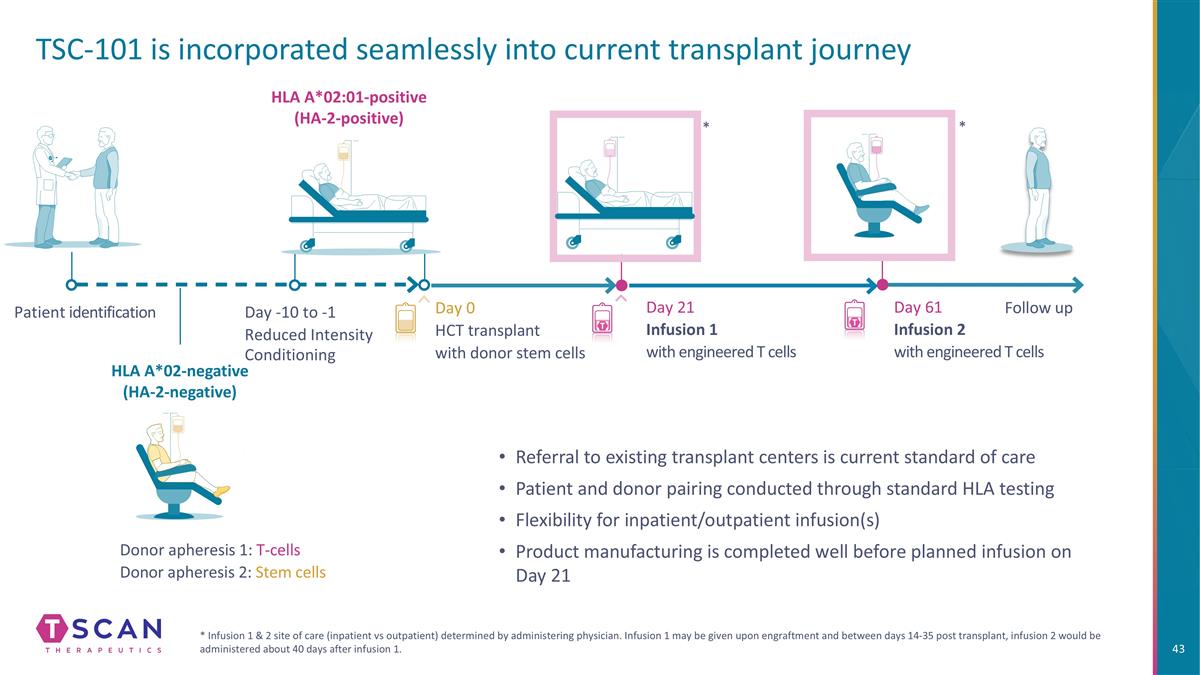
TSC-101 is incorporated seamlessly into current transplant journey * Infusion 1 & 2 site of care (inpatient vs outpatient) determined by administering physician. Infusion 1 may be given upon engraftment and between days 14-35 post transplant, infusion 2 would be administered about 40 days after infusion 1. Patient identification Day 0 HCT transplant with donor stem cells Donor apheresis 1: T-cells Donor apheresis 2: Stem cells Day 21 Infusion 1 with engineered T cells Day 61 Infusion 2 with engineered T cells Follow up Day -10 to -1 Reduced Intensity Conditioning * * HLA A*02:01-positive (HA-2-positive) HLA A*02-negative (HA-2-negative) Referral to existing transplant centers is current standard of care Patient and donor pairing conducted through standard HLA testing Flexibility for inpatient/outpatient infusion(s) Product manufacturing is completed well before planned infusion on Day 21
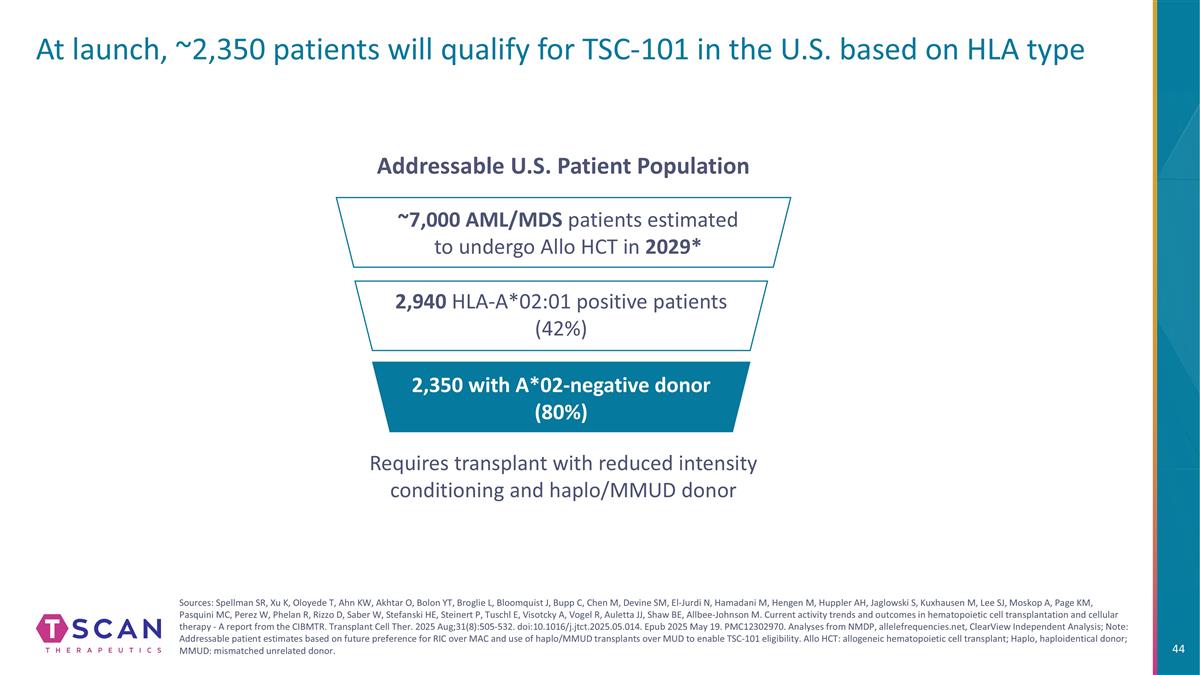
At launch, ~2,350 patients will qualify for TSC-101 in the U.S. based on HLA type ~7,000 AML/MDS patients estimated to undergo Allo HCT in 2029* 2,940 HLA-A*02:01 positive patients (42%) 2,350 with A*02-negative donor (80%) Addressable U.S. Patient Population Requires transplant with reduced intensity conditioning and haplo/MMUD donor Sources: Spellman SR, Xu K, Oloyede T, Ahn KW, Akhtar O, Bolon YT, Broglie L, Bloomquist J, Bupp C, Chen M, Devine SM, El-Jurdi N, Hamadani M, Hengen M, Huppler AH, Jaglowski S, Kuxhausen M, Lee SJ, Moskop A, Page KM, Pasquini MC, Perez W, Phelan R, Rizzo D, Saber W, Stefanski HE, Steinert P, Tuschl E, Visotcky A, Vogel R, Auletta JJ, Shaw BE, Allbee-Johnson M. Current activity trends and outcomes in hematopoietic cell transplantation and cellular therapy - A report from the CIBMTR. Transplant Cell Ther. 2025 Aug;31(8):505-532. doi:10.1016/j.jtct.2025.05.014. Epub 2025 May 19. PMC12302970. Analyses from NMDP, allelefrequencies.net, ClearView Independent Analysis; Note: Addressable patient estimates based on future preference for RIC over MAC and use of haplo/MMUD transplants over MUD to enable TSC-101 eligibility. Allo HCT: allogeneic hematopoietic cell transplant; Haplo, haploidentical donor; MMUD: mismatched unrelated donor.
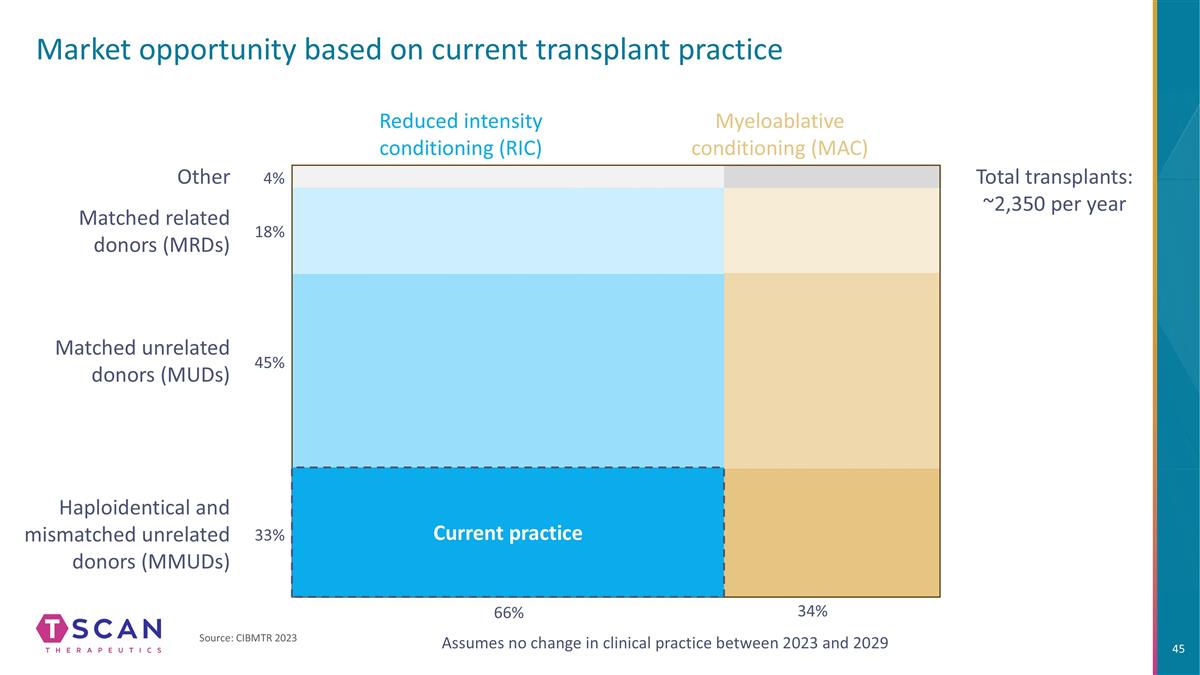
Market opportunity based on current transplant practice Reduced intensity conditioning (RIC) Myeloablative conditioning (MAC) 4% 18% 45% 33% Haploidentical and mismatched unrelated donors (MMUDs) Matched unrelated donors (MUDs) Matched related donors (MRDs) Other 66% 34% Total transplants: ~2,350 per year Current practice Assumes no change in clinical practice between 2023 and 2029 Source: CIBMTR 2023
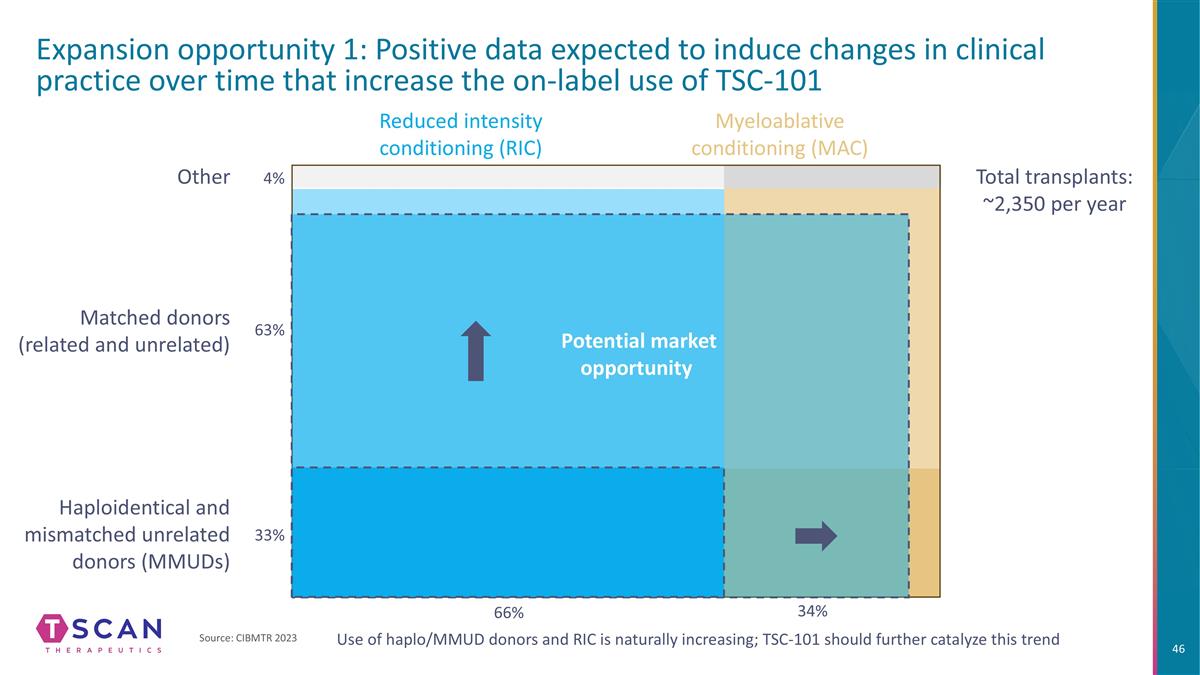
Expansion opportunity 1: Positive data expected to induce changes in clinical practice over time that increase the on-label use of TSC-101 Total transplants: ~2,350 per year Reduced intensity conditioning (RIC) Myeloablative conditioning (MAC) 4% 63% 33% Haploidentical and mismatched unrelated donors (MMUDs) Matched donors (related and unrelated) Other 66% 34% Potential market opportunity Use of haplo/MMUD donors and RIC is naturally increasing; TSC-101 should further catalyze this trend Source: CIBMTR 2023
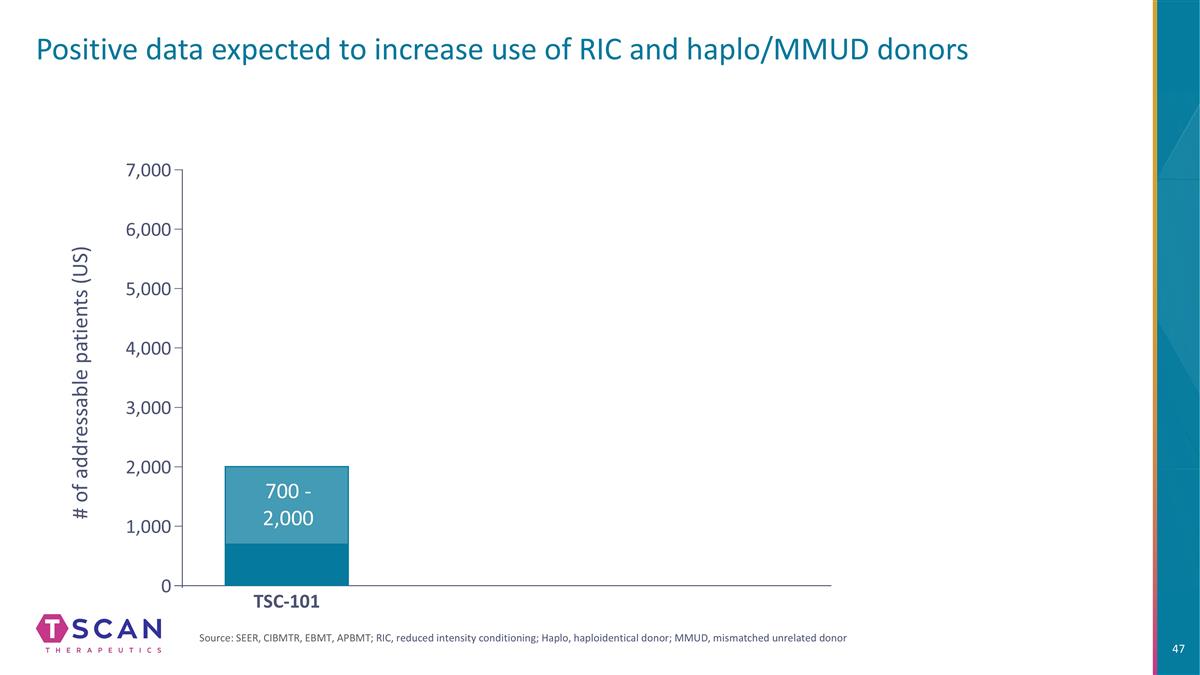
Positive data expected to increase use of RIC and haplo/MMUD donors # of addressable patients (US) Source: SEER, CIBMTR, EBMT, APBMT; RIC, reduced intensity conditioning; Haplo, haploidentical donor; MMUD, mismatched unrelated donor TSC-101 7,000 6,000 0 5,000 1,000 2,000 3,000 4,000 700 - 2,000
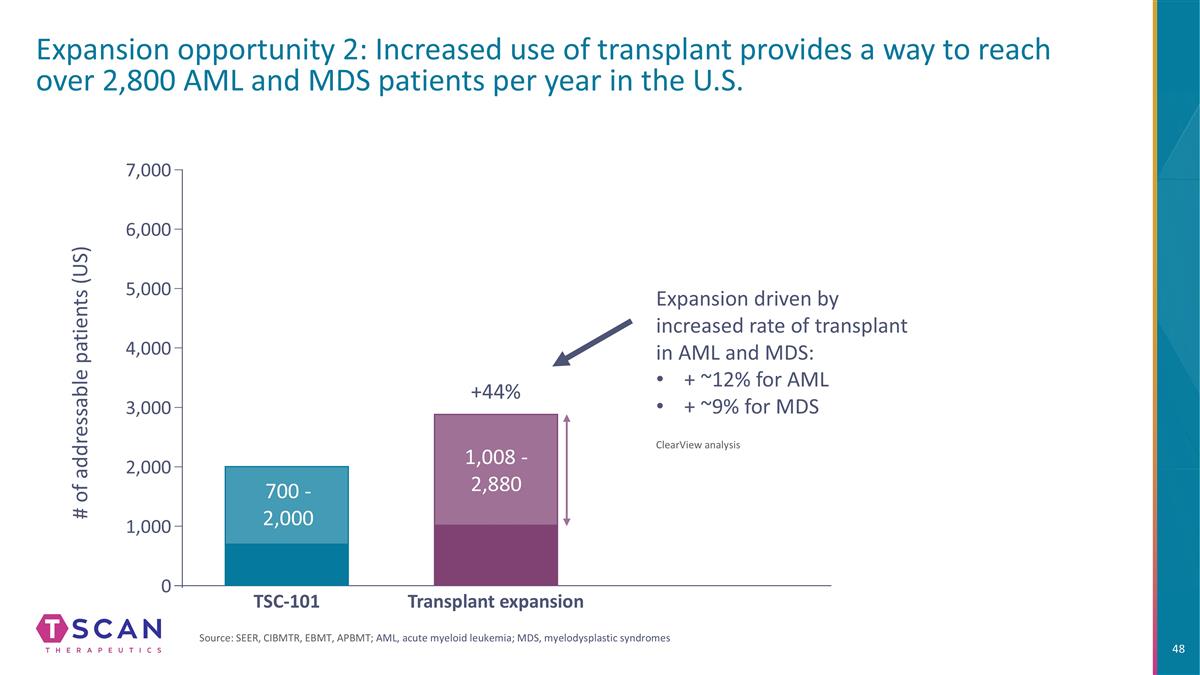
Expansion opportunity 2: Increased use of transplant provides a way to reach over 2,800 AML and MDS patients per year in the U.S. # of addressable patients (US) Source: SEER, CIBMTR, EBMT, APBMT; AML, acute myeloid leukemia; MDS, myelodysplastic syndromes TSC-101 Transplant expansion +44% 7,000 6,000 0 5,000 1,000 2,000 3,000 4,000 700 - 2,000 Expansion driven by increased rate of transplant in AML and MDS: + ~12% for AML + ~9% for MDS ClearView analysis 1,008 - 2,880
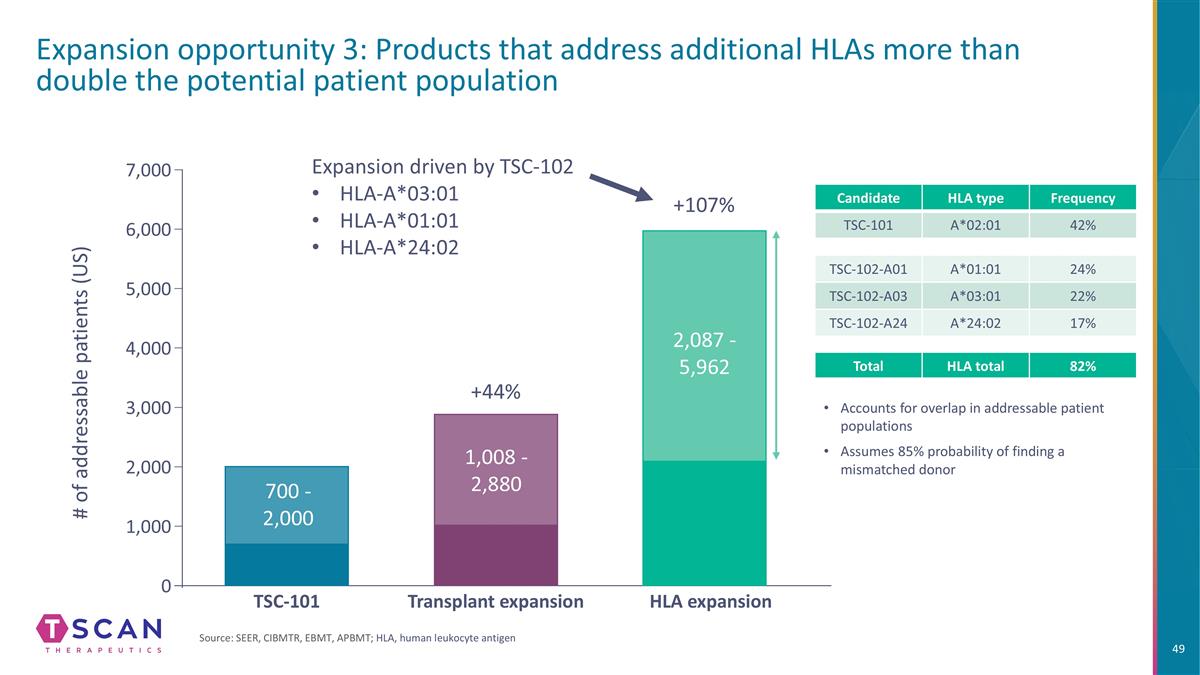
Expansion opportunity 3: Products that address additional HLAs more than double the potential patient population # of addressable patients (US) Source: SEER, CIBMTR, EBMT, APBMT; HLA, human leukocyte antigen TSC-101 Transplant expansion 1,008 - 2,880 +44% 7,000 6,000 0 5,000 1,000 2,000 3,000 4,000 700 - 2,000 HLA expansion 2,087 - 5,962 +107% Accounts for overlap in addressable patient populations Assumes 85% probability of finding a mismatched donor TSC-102-A01 A*01:01 24% TSC-102-A03 A*03:01 22% TSC-102-A24 A*24:02 17% Candidate HLA type Frequency TSC-101 A*02:01 42% Total HLA total 82% Expansion driven by TSC-102 HLA-A*03:01 HLA-A*01:01 HLA-A*24:02

Q&A

Appendix
Heme Program: TSC-101 Cohort A chimerism data
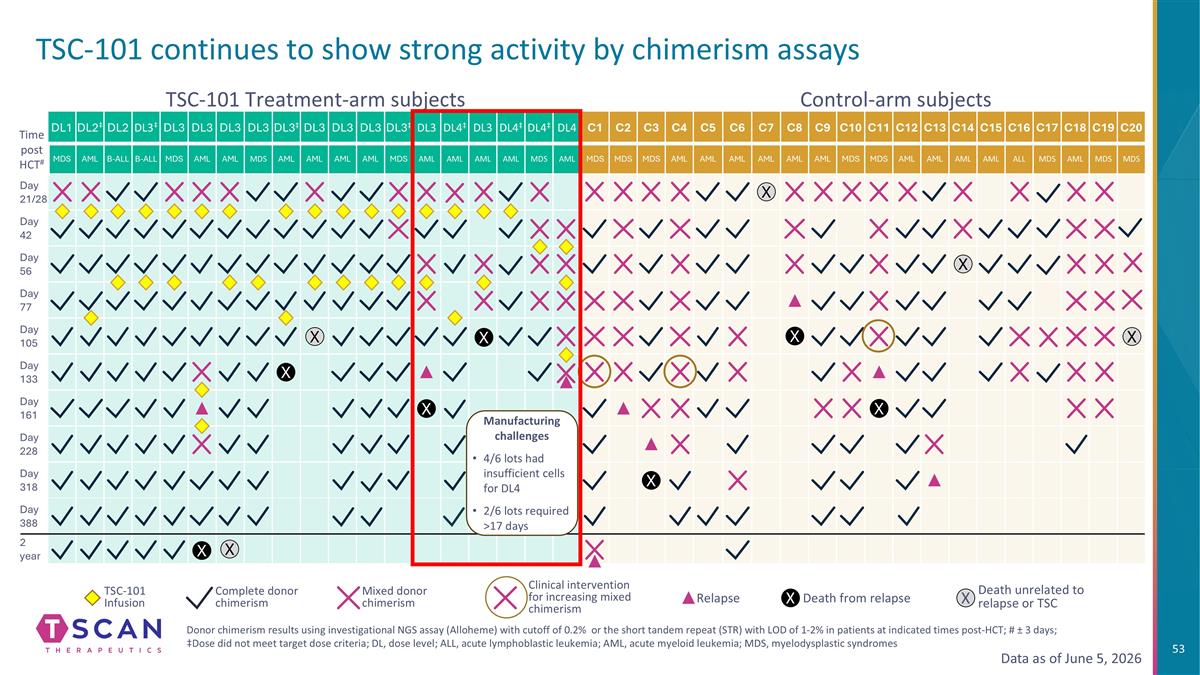
TSC-101 continues to show strong activity by chimerism assays DL1 DL2‡ DL2 DL3‡ DL3 DL3 DL3 DL3 DL3‡ DL3 DL3 DL3 DL3‡ DL3 DL4‡ DL3 DL4‡ DL4‡ DL4 C1 C2 C3 C4 C5 C6 C7 C8 C9 C10 C11 C12 C13 C14 C15 C16 C17 C18 C19 C20 MDS AML B-ALL B-ALL MDS AML AML MDS AML AML AML AML MDS AML AML AML AML MDS AML MDS MDS MDS AML AML AML AML AML AML MDS MDS AML AML AML AML ALL MDS AML MDS MDS Day 21/28 Day 42 Day 56 Day 77 Day 105 Day 133 Day 161 Day 228 Day 318 Day 388 2 year Control-arm subjects TSC-101 Treatment-arm subjects Time post HCT# X X X X X TSC-101 Infusion Complete donor chimerism Mixed donor chimerism Clinical intervention for increasing mixed chimerism Relapse Death from relapse X Death unrelated to relapse or TSC X X X X Donor chimerism results using investigational NGS assay (Alloheme) with cutoff of 0.2% or the short tandem repeat (STR) with LOD of 1-2% in patients at indicated times post-HCT; # ± 3 days; ‡Dose did not meet target dose criteria; DL, dose level; ALL, acute lymphoblastic leukemia; AML, acute myeloid leukemia; MDS, myelodysplastic syndromes X X X Data as of June 5, 2026 X Manufacturing challenges 4/6 lots had insufficient cells for DL4 2/6 lots required >17 days

Market opportunity
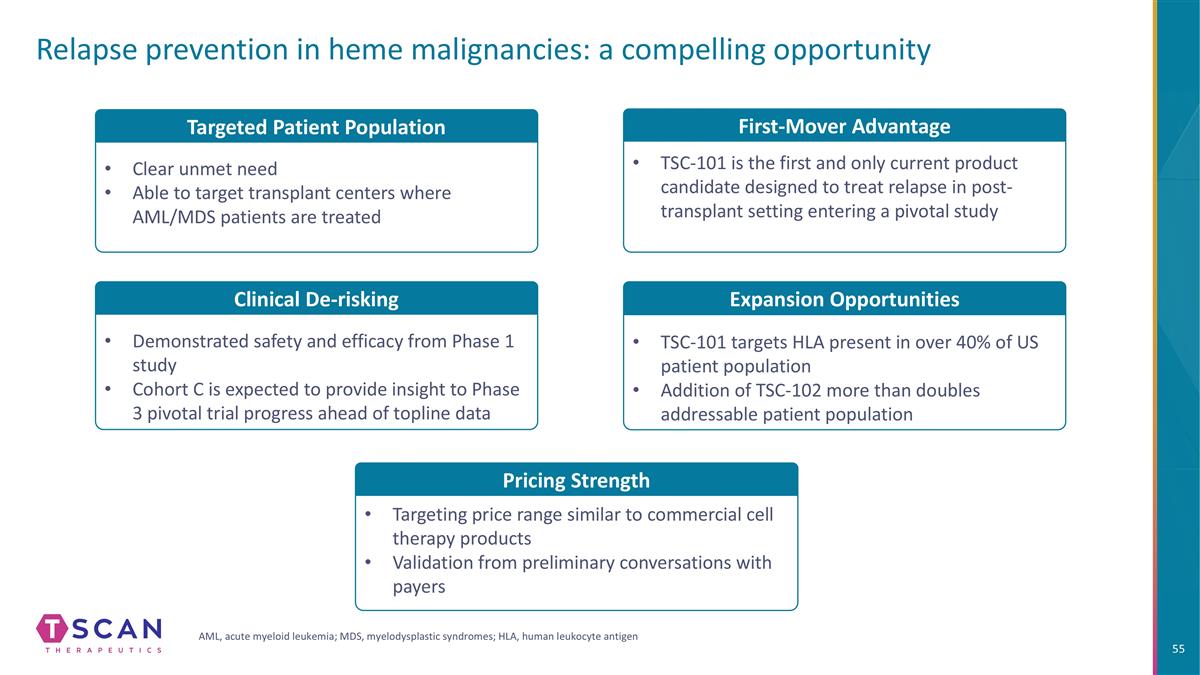
Relapse prevention in heme malignancies: a compelling opportunity Targeted Patient Population Clinical De-risking First-Mover Advantage Clear unmet need Able to target transplant centers where AML/MDS patients are treated TSC-101 is the first and only current product candidate designed to treat relapse in post-transplant setting entering a pivotal study Pricing Strength Targeting price range similar to commercial cell therapy products Validation from preliminary conversations with payers Demonstrated safety and efficacy from Phase 1 study Cohort C is expected to provide insight to Phase 3 pivotal trial progress ahead of topline data Expansion Opportunities TSC-101 targets HLA present in over 40% of US patient population Addition of TSC-102 more than doubles addressable patient population AML, acute myeloid leukemia; MDS, myelodysplastic syndromes; HLA, human leukocyte antigen
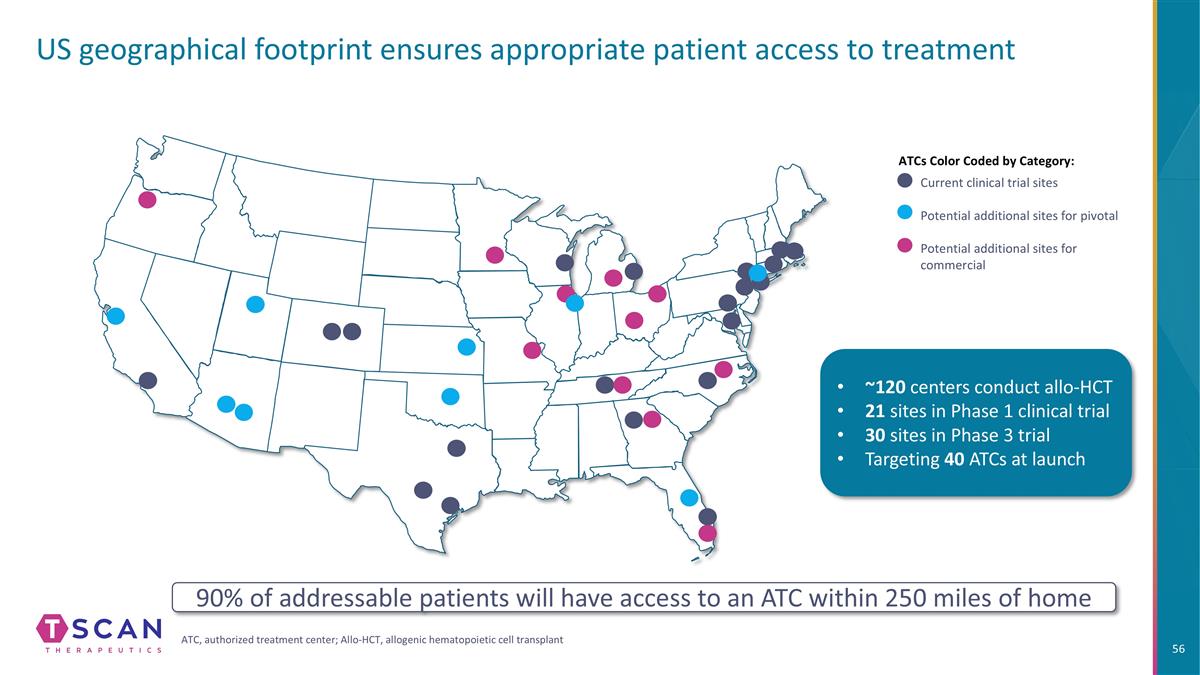
US geographical footprint ensures appropriate patient access to treatment ~120 centers conduct allo-HCT 21 sites in Phase 1 clinical trial 30 sites in Phase 3 trial Targeting 40 ATCs at launch ATCs Color Coded by Category: Current clinical trial sites Potential additional sites for pivotal Potential additional sites for commercial 90% of addressable patients will have access to an ATC within 250 miles of home ATC, authorized treatment center; Allo-HCT, allogenic hematopoietic cell transplant
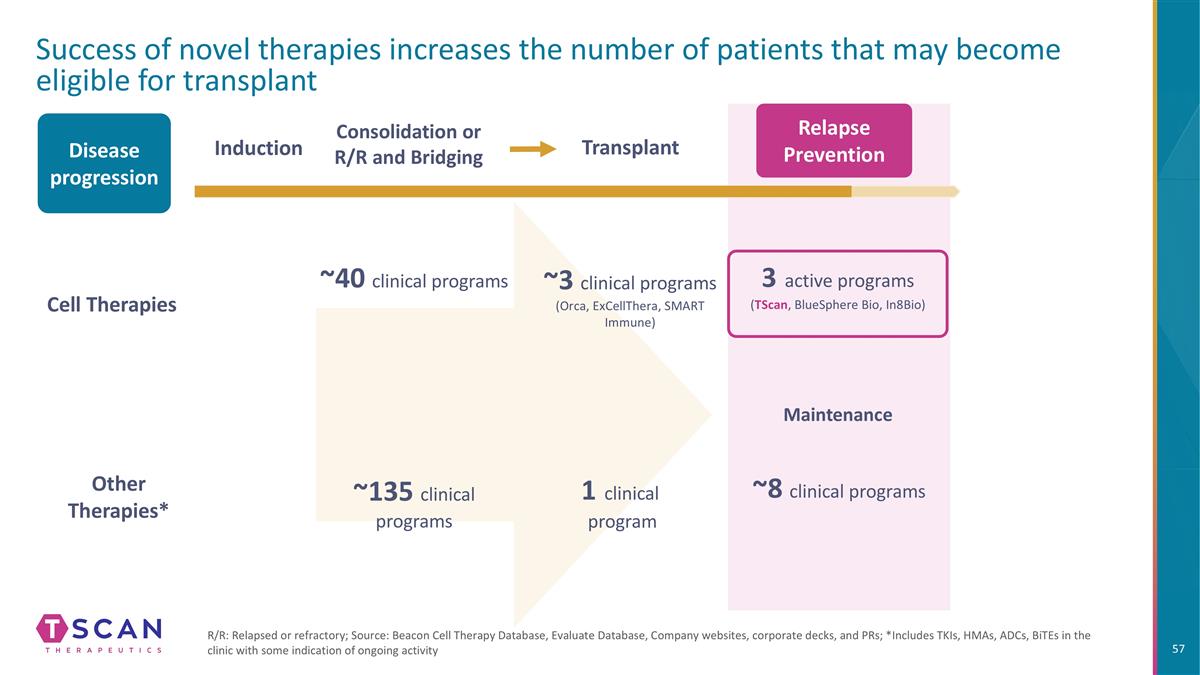
Success of novel therapies increases the number of patients that may become eligible for transplant Induction Consolidation or R/R and Bridging Transplant R/R: Relapsed or refractory; Source: Beacon Cell Therapy Database, Evaluate Database, Company websites, corporate decks, and PRs; *Includes TKIs, HMAs, ADCs, BiTEs in the clinic with some indication of ongoing activity Disease progression Relapse Prevention Cell Therapies Other Therapies* 3 active programs (TScan, BlueSphere Bio, In8Bio) ~8 clinical programs Maintenance ~3 clinical programs (Orca, ExCellThera, SMART Immune) 1 clinical program ~40 clinical programs ~135 clinical programs
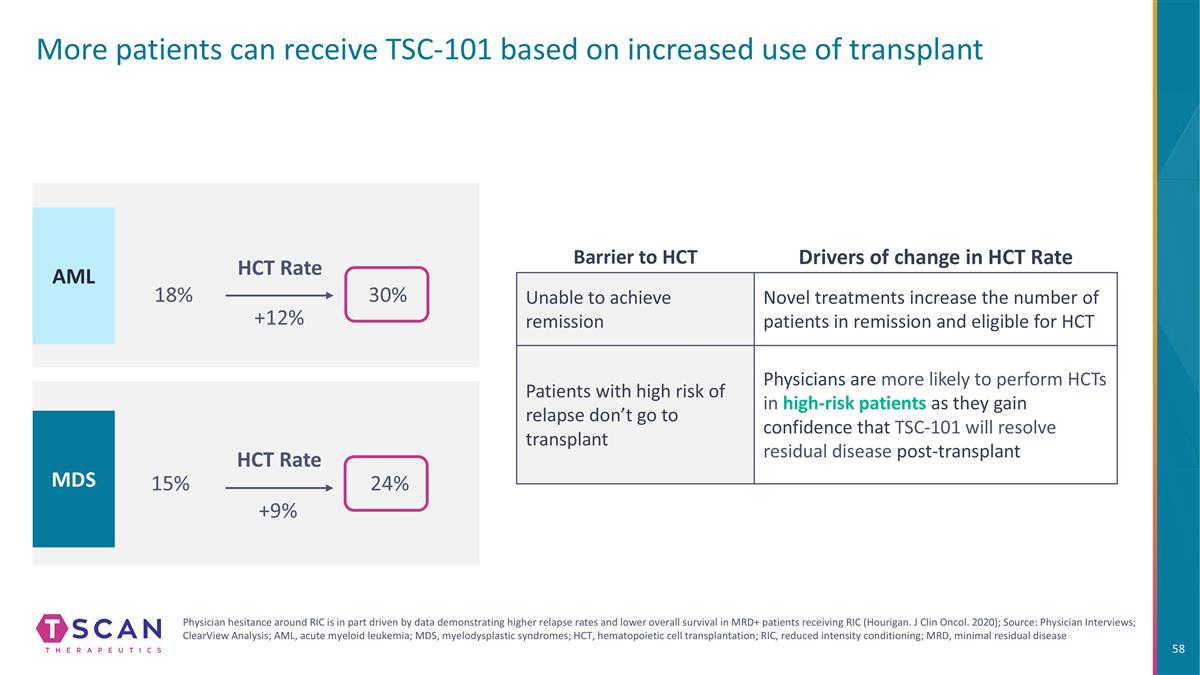
Physician hesitance around RIC is in part driven by data demonstrating higher relapse rates and lower overall survival in MRD+ patients receiving RIC (Hourigan. J Clin Oncol. 2020); Source: Physician Interviews; ClearView Analysis; AML, acute myeloid leukemia; MDS, myelodysplastic syndromes; HCT, hematopoietic cell transplantation; RIC, reduced intensity conditioning; MRD, minimal residual disease AML MDS HCT Rate 18% 30% HCT Rate 15% 24% Barrier to HCT Drivers of change in HCT Rate Unable to achieve remission Novel treatments increase the number of patients in remission and eligible for HCT Patients with high risk of relapse don’t go to transplant Physicians are more likely to perform HCTs in high-risk patients as they gain confidence that TSC-101 will resolve residual disease post-transplant More patients can receive TSC-101 based on increased use of transplant +12% +9%
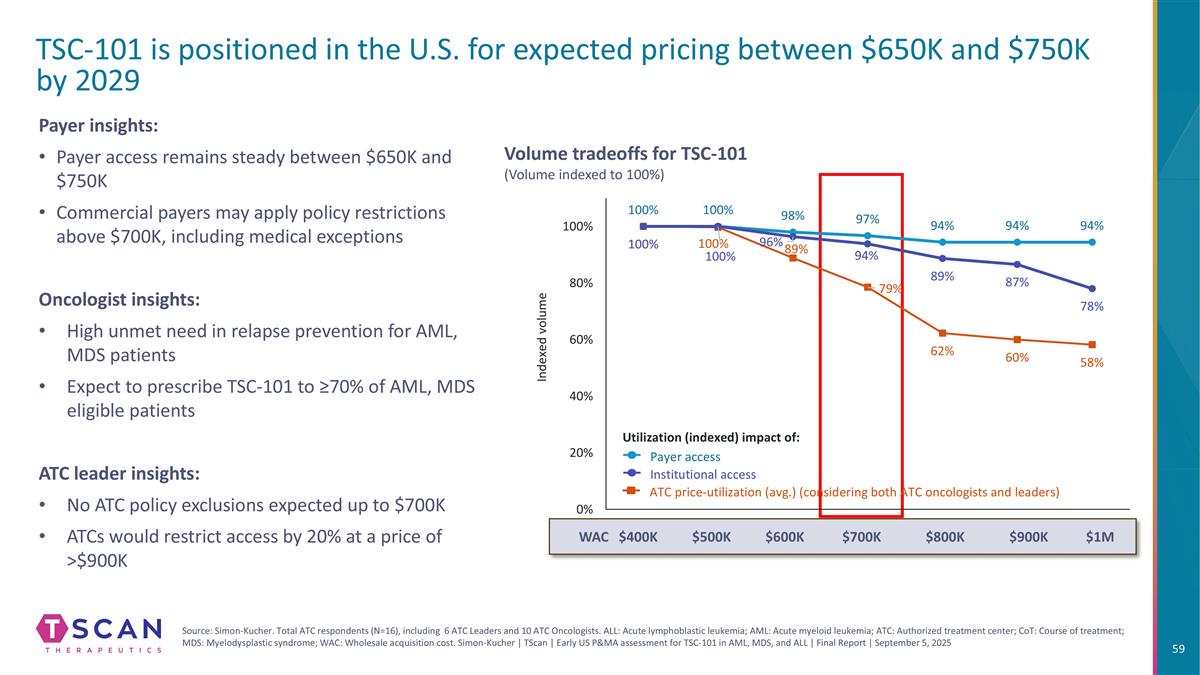
TSC-101 is positioned in the U.S. for expected pricing between $650K and $750K by 2029 WAC $400K $500K $600K $700K $800K $900K $1M Volume tradeoffs for TSC-101 (Volume indexed to 100%) Indexed volume Payer access Institutional access ATC price-utilization (avg.) (considering both ATC oncologists and leaders) Utilization (indexed) impact of: Payer insights: Payer access remains steady between $650K and $750K Commercial payers may apply policy restrictions above $700K, including medical exceptions Oncologist insights: High unmet need in relapse prevention for AML, MDS patients Expect to prescribe TSC-101 to ≥70% of AML, MDS eligible patients ATC leader insights: No ATC policy exclusions expected up to $700K ATCs would restrict access by 20% at a price of >$900K Source: Simon-Kucher. Total ATC respondents (N=16), including 6 ATC Leaders and 10 ATC Oncologists. ALL: Acute lymphoblastic leukemia; AML: Acute myeloid leukemia; ATC: Authorized treatment center; CoT: Course of treatment; MDS: Myelodysplastic syndrome; WAC: Wholesale acquisition cost. Simon-Kucher | TScan | Early US P&MA assessment for TSC-101 in AML, MDS, and ALL | Final Report | September 5, 2025
Solid Tumors Developing in vivo-engineered multiplex TCR-T therapy to overcome tumor heterogeneity
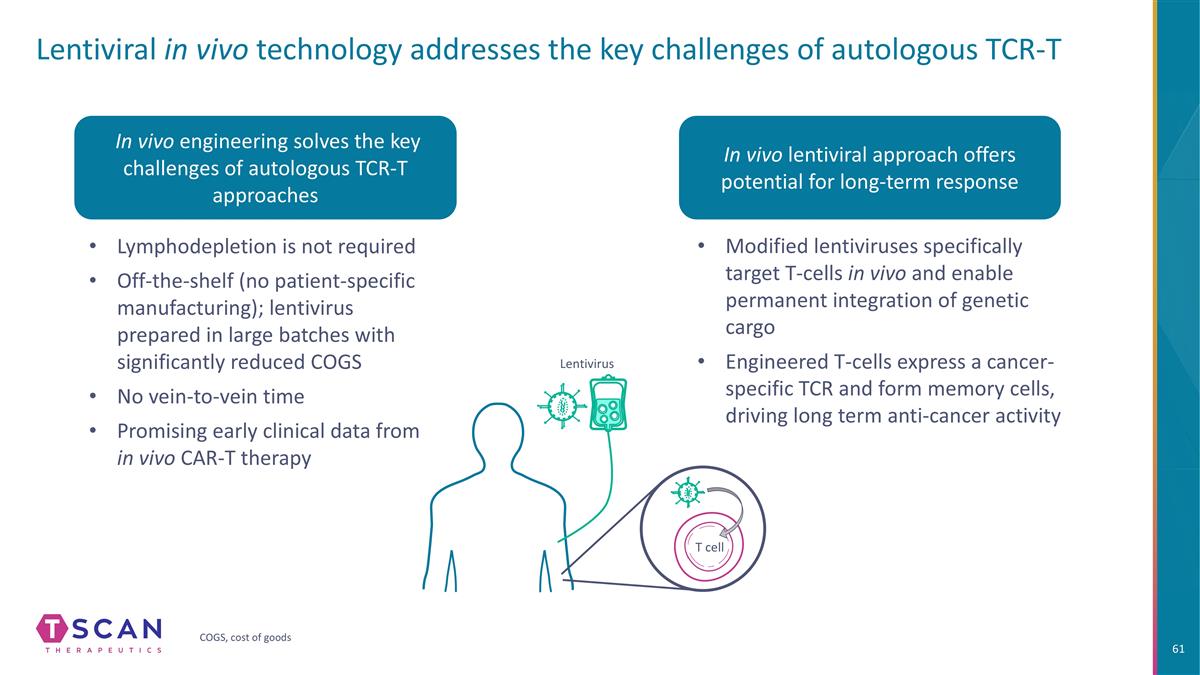
Lentivirus Lentiviral in vivo technology addresses the key challenges of autologous TCR-T In vivo engineering solves the key challenges of autologous TCR-T approaches Lymphodepletion is not required Off-the-shelf (no patient-specific manufacturing); lentivirus prepared in large batches with significantly reduced COGS No vein-to-vein time Promising early clinical data from in vivo CAR-T therapy In vivo lentiviral approach offers potential for long-term response Modified lentiviruses specifically target T-cells in vivo and enable permanent integration of genetic cargo Engineered T-cells express a cancer-specific TCR and form memory cells, driving long term anti-cancer activity T cell COGS, cost of goods
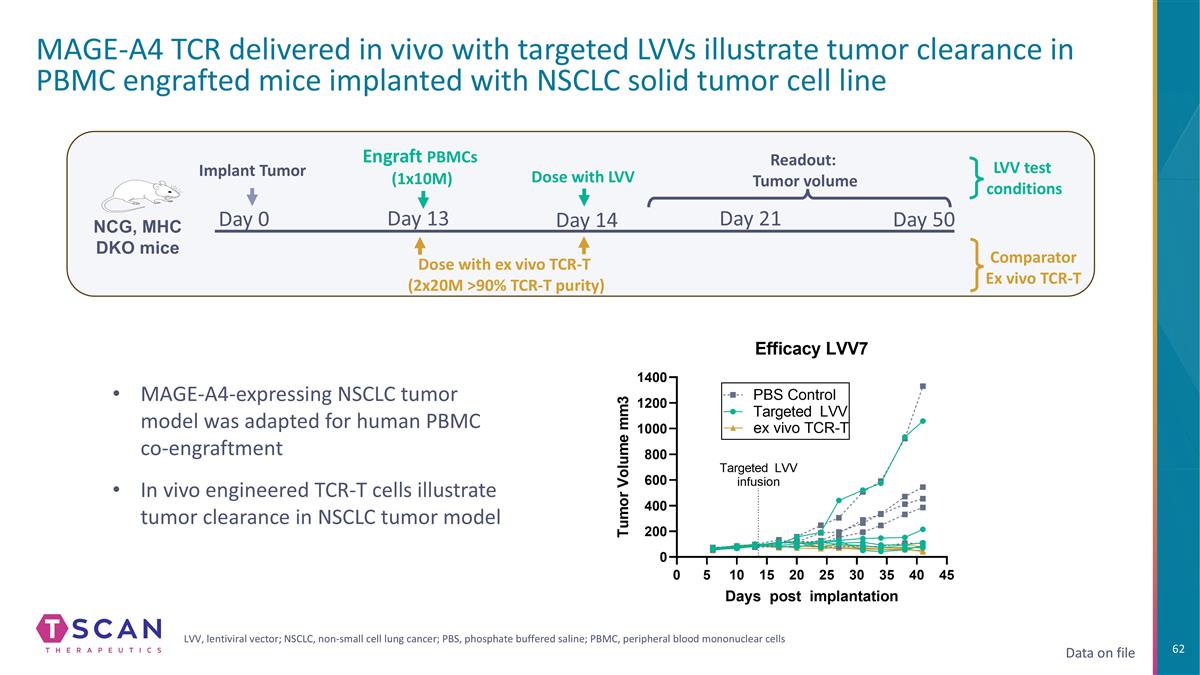
MAGE-A4 TCR delivered in vivo with targeted LVVs illustrate tumor clearance in PBMC engrafted mice implanted with NSCLC solid tumor cell line Implant Tumor Day 14 Day 0 Day 13 NCG, MHC DKO mice Readout: Tumor volume Dose with LVV Engraft PBMCs (1x10M) Day 50 Day 21 Dose with ex vivo TCR-T (2x20M >90% TCR-T purity) Comparator Ex vivo TCR-T LVV test conditions MAGE-A4-expressing NSCLC tumor model was adapted for human PBMC co-engraftment In vivo engineered TCR-T cells illustrate tumor clearance in NSCLC tumor model Data on file LVV, lentiviral vector; NSCLC, non-small cell lung cancer; PBS, phosphate buffered saline; PBMC, peripheral blood mononuclear cells
Autoimmunity Deploying TargetScan platform to discover novel T-cell targets in autoimmune disorders
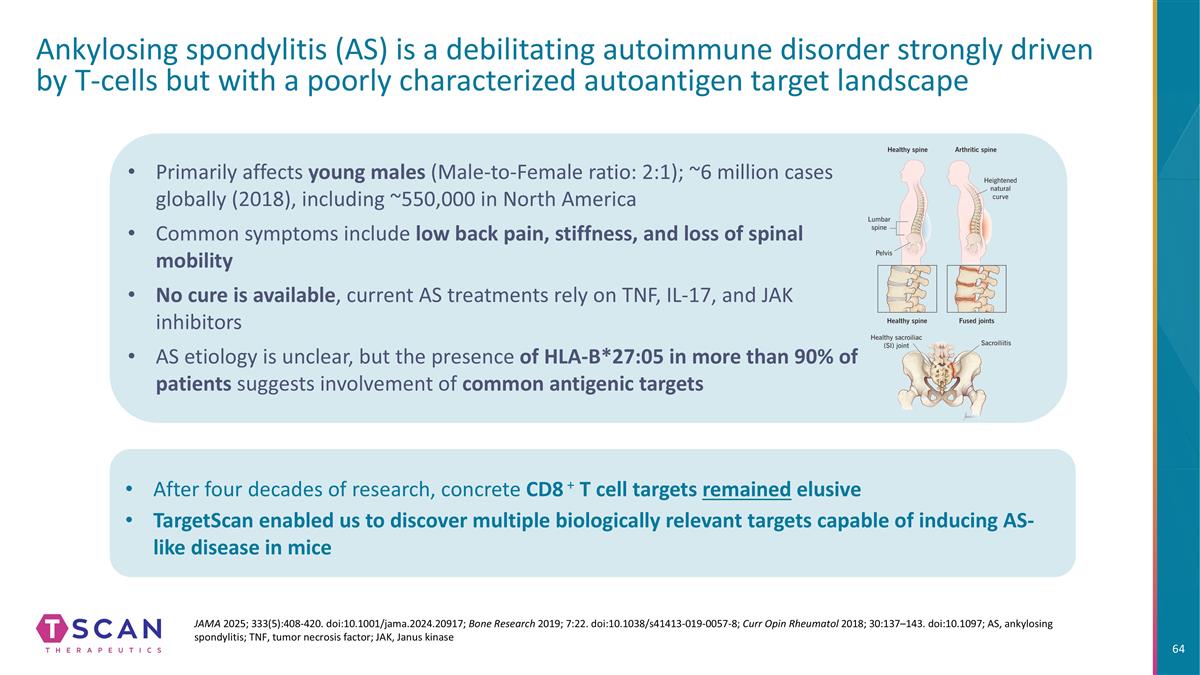
Ankylosing spondylitis (AS) is a debilitating autoimmune disorder strongly driven by T-cells but with a poorly characterized autoantigen target landscape Primarily affects young males (Male-to-Female ratio: 2:1); ~6 million cases globally (2018), including ~550,000 in North America Common symptoms include low back pain, stiffness, and loss of spinal mobility No cure is available, current AS treatments rely on TNF, IL-17, and JAK inhibitors AS etiology is unclear, but the presence of HLA-B*27:05 in more than 90% of patients suggests involvement of common antigenic targets After four decades of research, concrete CD8 + T cell targets remained elusive TargetScan enabled us to discover multiple biologically relevant targets capable of inducing AS-like disease in mice JAMA 2025; 333(5):408-420. doi:10.1001/jama.2024.20917; Bone Research 2019; 7:22. doi:10.1038/s41413-019-0057-8; Curr Opin Rheumatol 2018; 30:137–143. doi:10.1097; AS, ankylosing spondylitis; TNF, tumor necrosis factor; JAK, Janus kinase
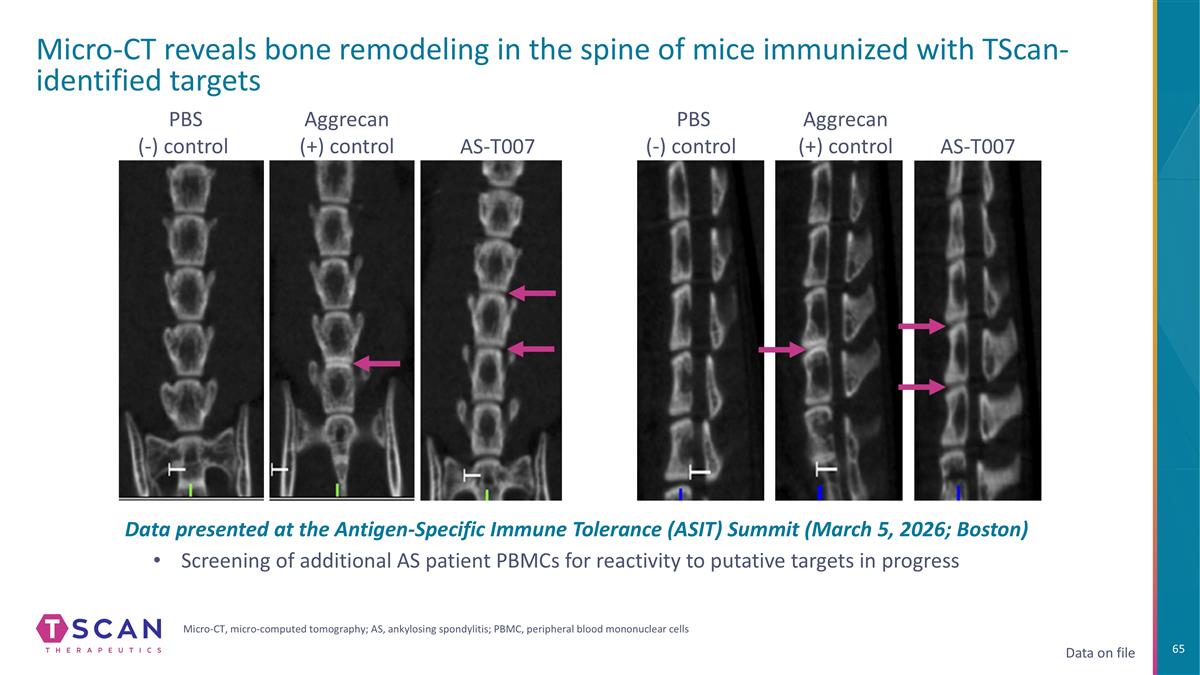
Micro-CT reveals bone remodeling in the spine of mice immunized with TScan-identified targets PBS (-) control AS-T007 Aggrecan (+) control PBS (-) control AS-T007 Aggrecan (+) control Data presented at the Antigen-Specific Immune Tolerance (ASIT) Summit (March 5, 2026; Boston) Screening of additional AS patient PBMCs for reactivity to putative targets in progress Data on file Micro-CT, micro-computed tomography; AS, ankylosing spondylitis; PBMC, peripheral blood mononuclear cells